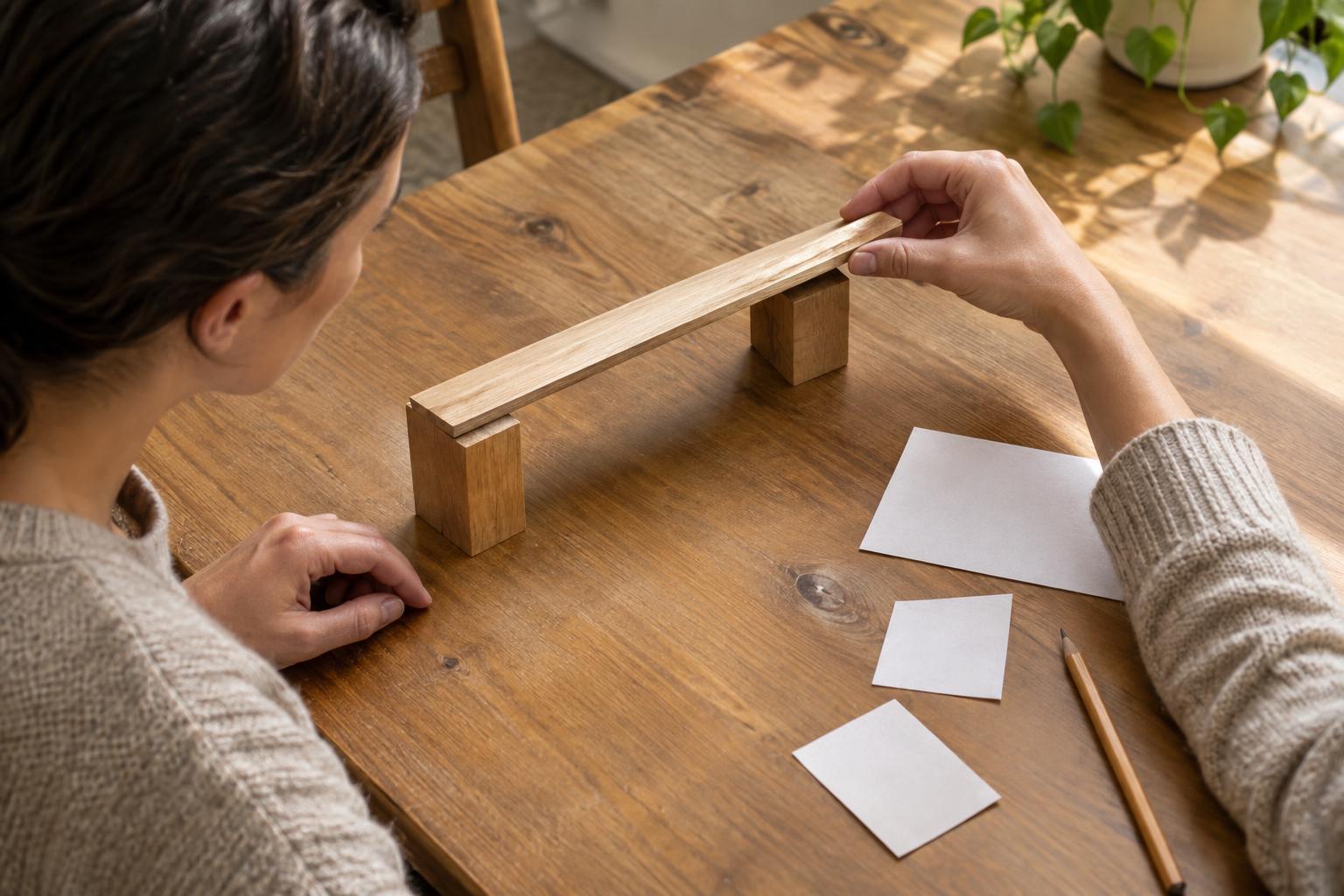
Creative ThinkingEarly ideas are hard to share because they are still changing. Learn how to choose the right listener, explain what is unfinished, ask focused questions, and turn feedback into a useful next step without treating every comment as an instruction.
Read article · 4 min↗
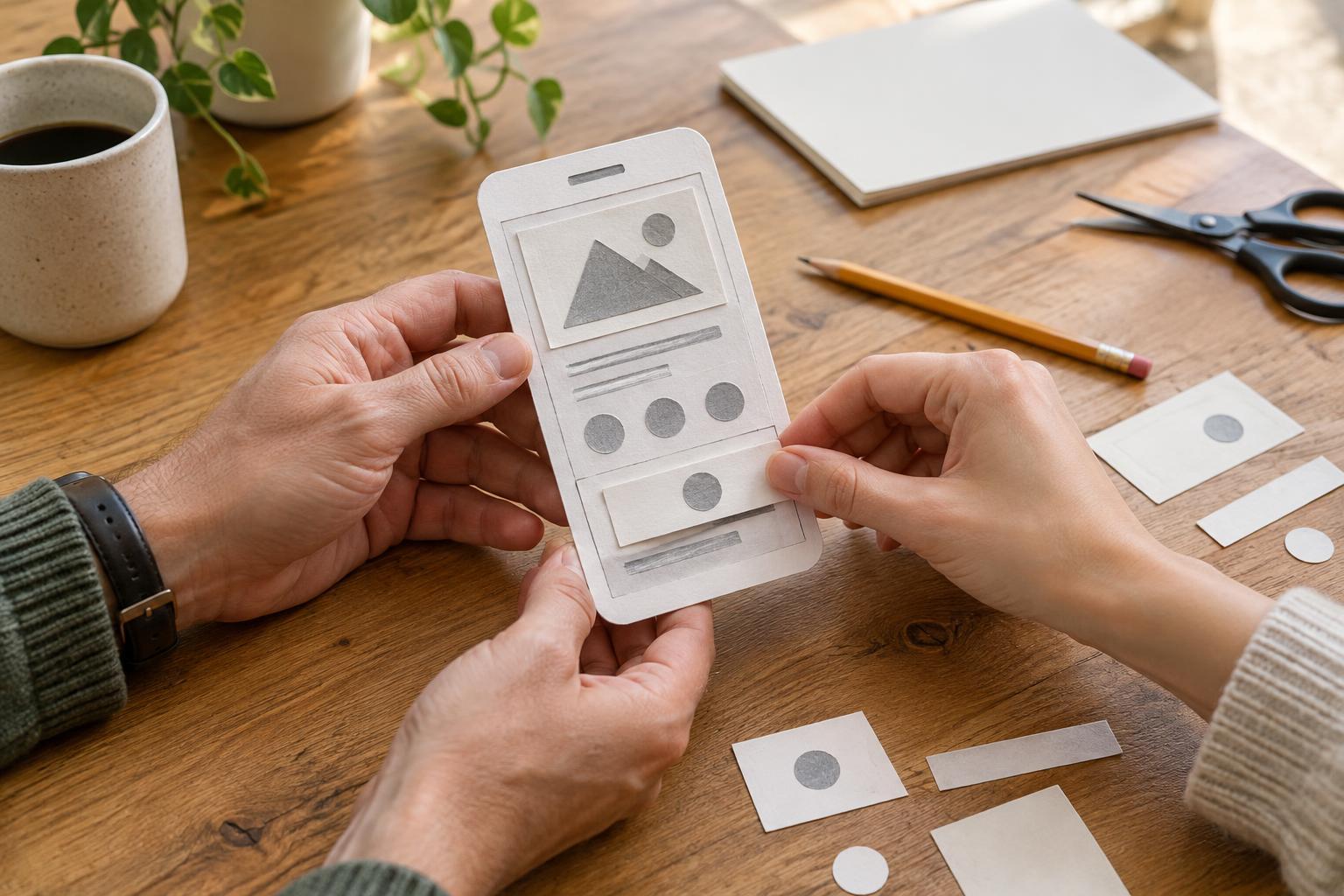
Creative ThinkingA paper prototype lets you make an idea visible before you spend time polishing it. Learn how to choose one question, build a rough model, observe someone using it, and decide what to change next.
Read article · 4 min↗
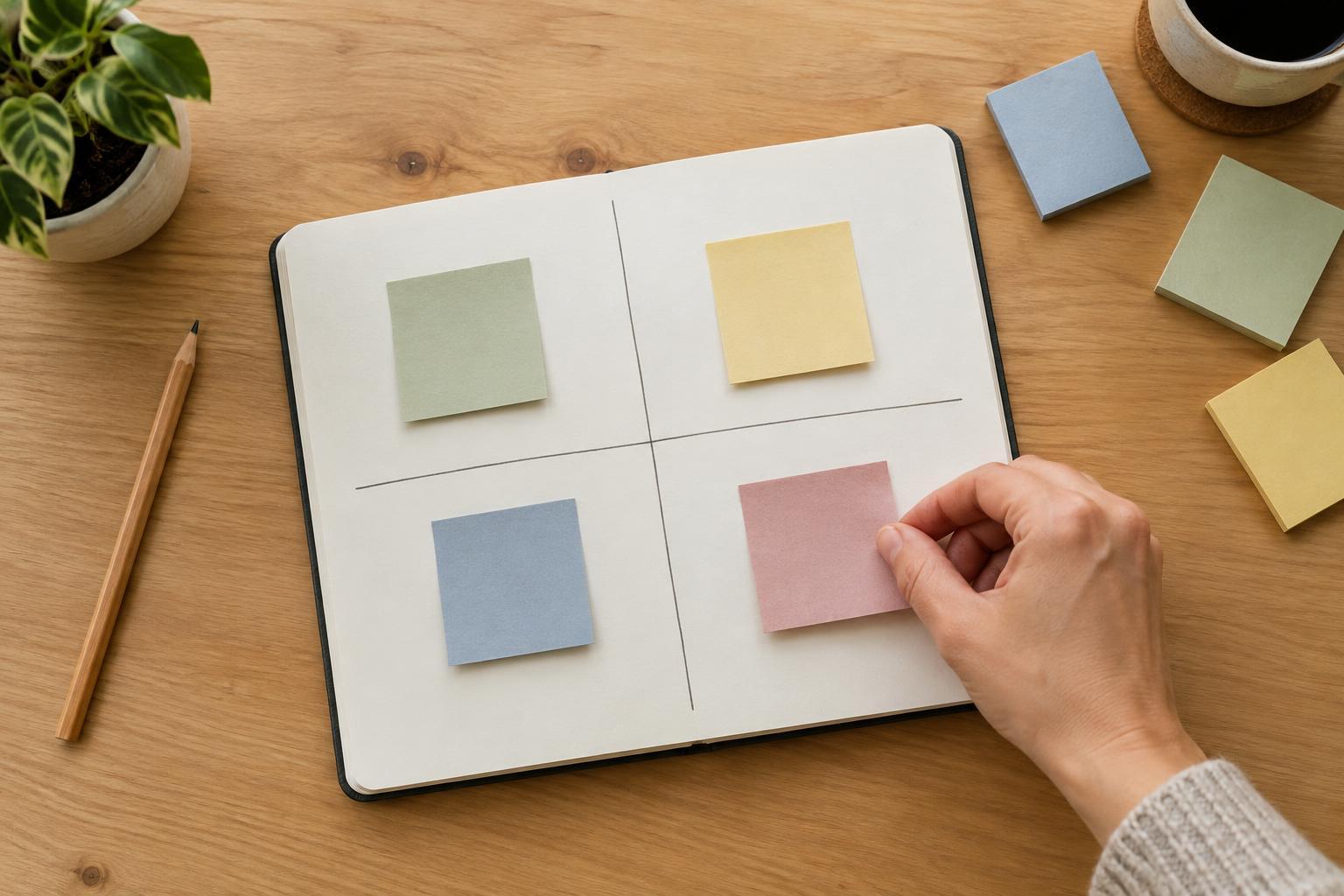
Creative ThinkingWhen every idea sounds promising, an impact-and-effort matrix can help you decide what to try first. Learn how to define your goal, place ideas on the grid, test your assumptions, and turn the result into a small next step.
Read article · 4 min↗
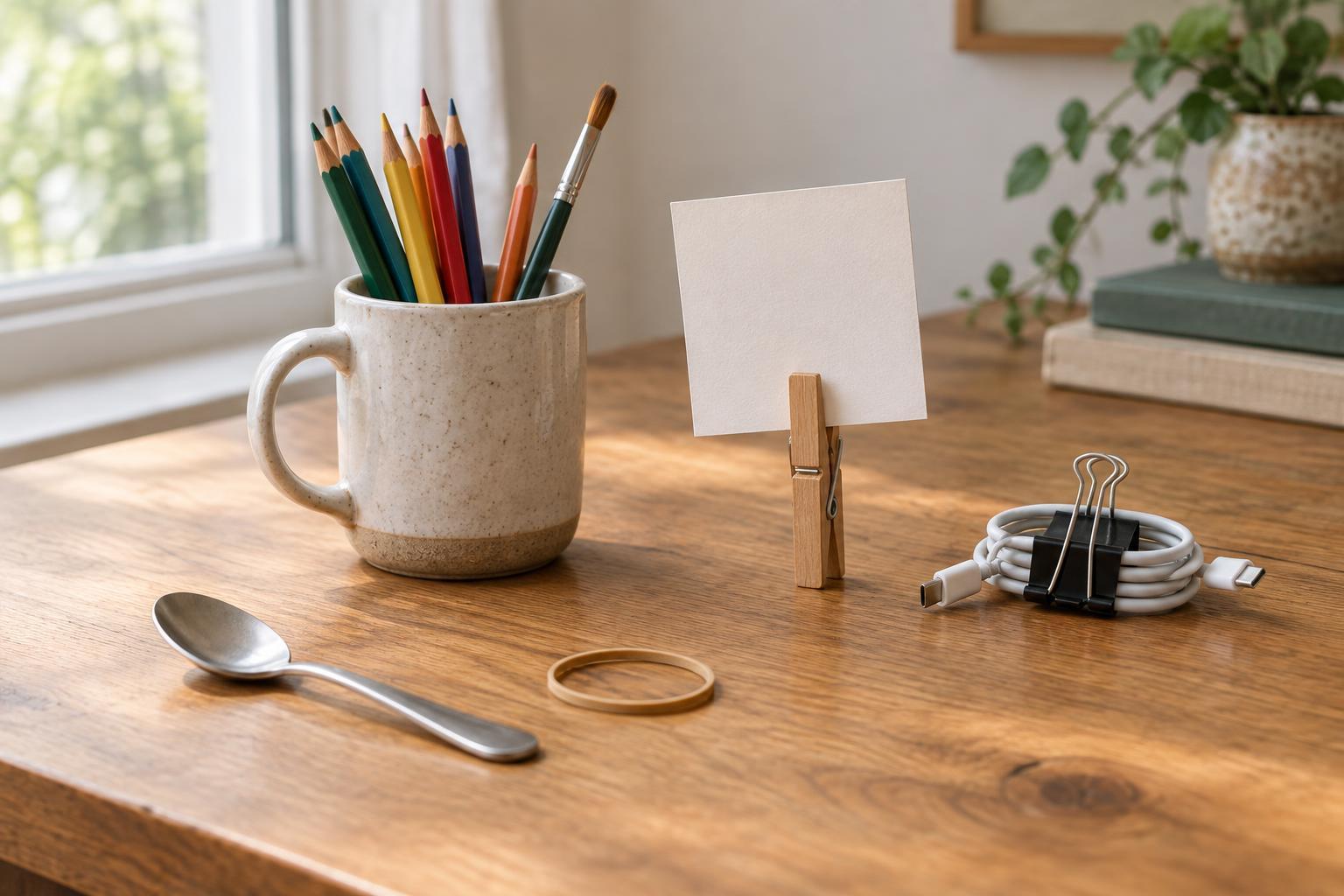
Creative ThinkingA familiar object can be hard to see beyond its usual purpose. Learn a simple routine for noticing its properties, generating alternative uses, and testing ideas safely.
Read article · 4 min↗

Creative ThinkingWhen a problem stops moving, more effort is not always the best next step. A short, deliberate break can help you return with a clearer view of your assumptions and possible next moves. Learn when to pause, what to do while away, and how to restart without losing momentum.
Read article · 4 min↗

Creative ThinkingAn idea notebook turns small observations into material for creative thinking. Learn what to capture, how to add useful context, and how to revisit your notes to develop ideas worth trying.
Read article · 4 min↗
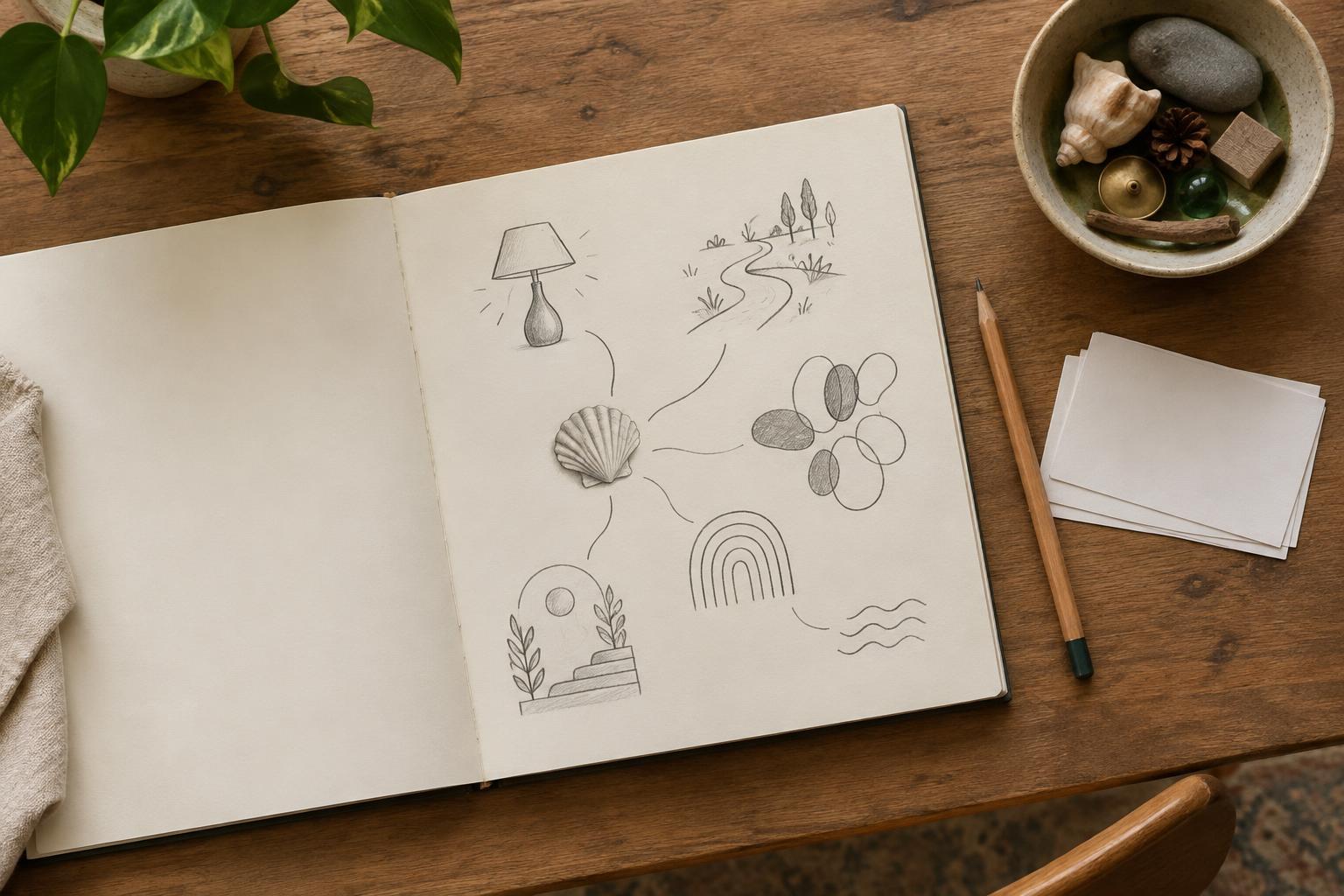
Creative ThinkingWhen familiar ideas keep circling, an unrelated word can give you a new starting point. Learn a simple way to use random word prompts, turn surprising connections into workable ideas, and decide which ones are worth developing.
Read article · 4 min↗
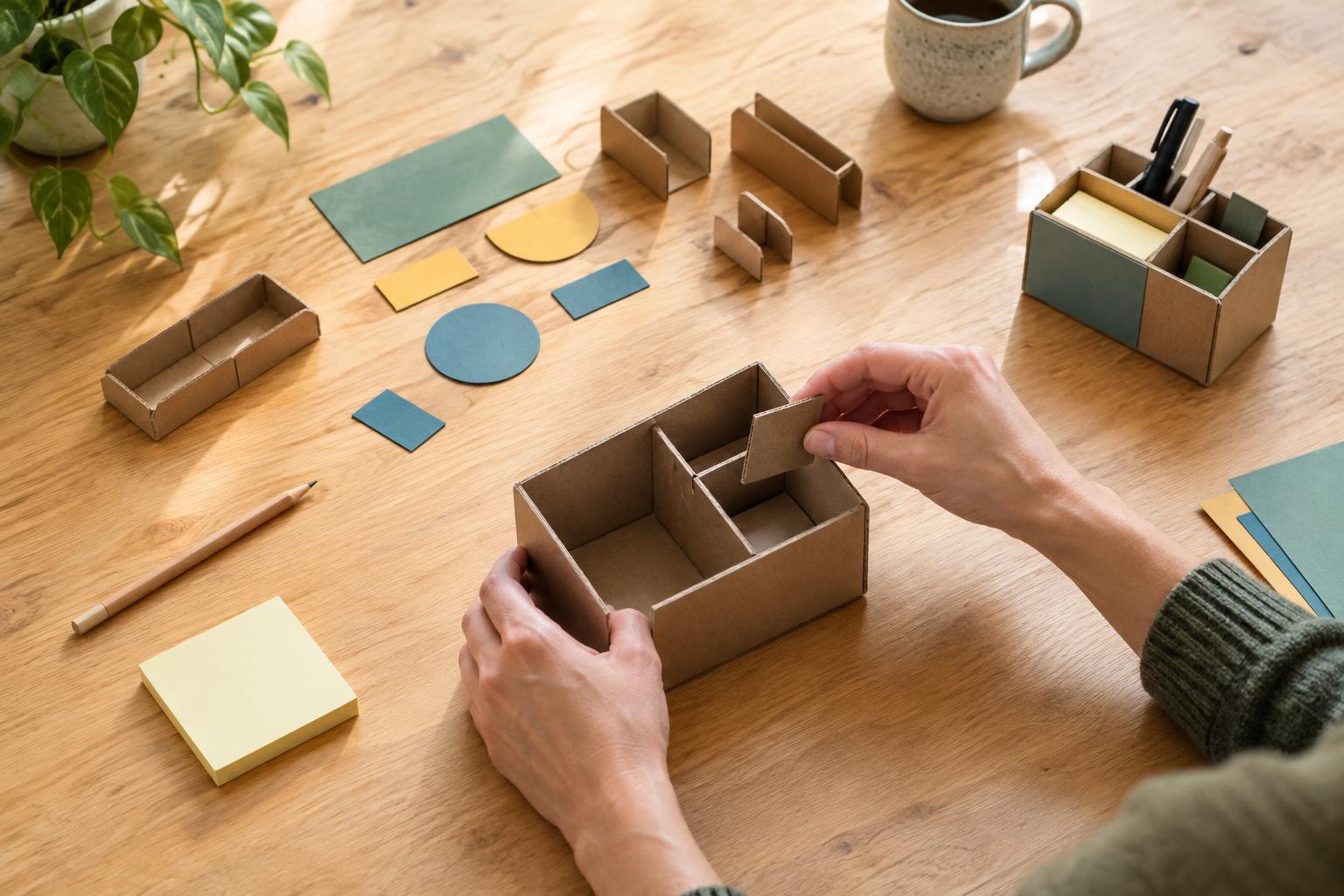
Creative ThinkingSCAMPER turns a vague wish to improve something into seven practical questions. Learn how to use its prompts, explore possibilities without judging too soon, and choose one small change to test.
Read article · 4 min↗
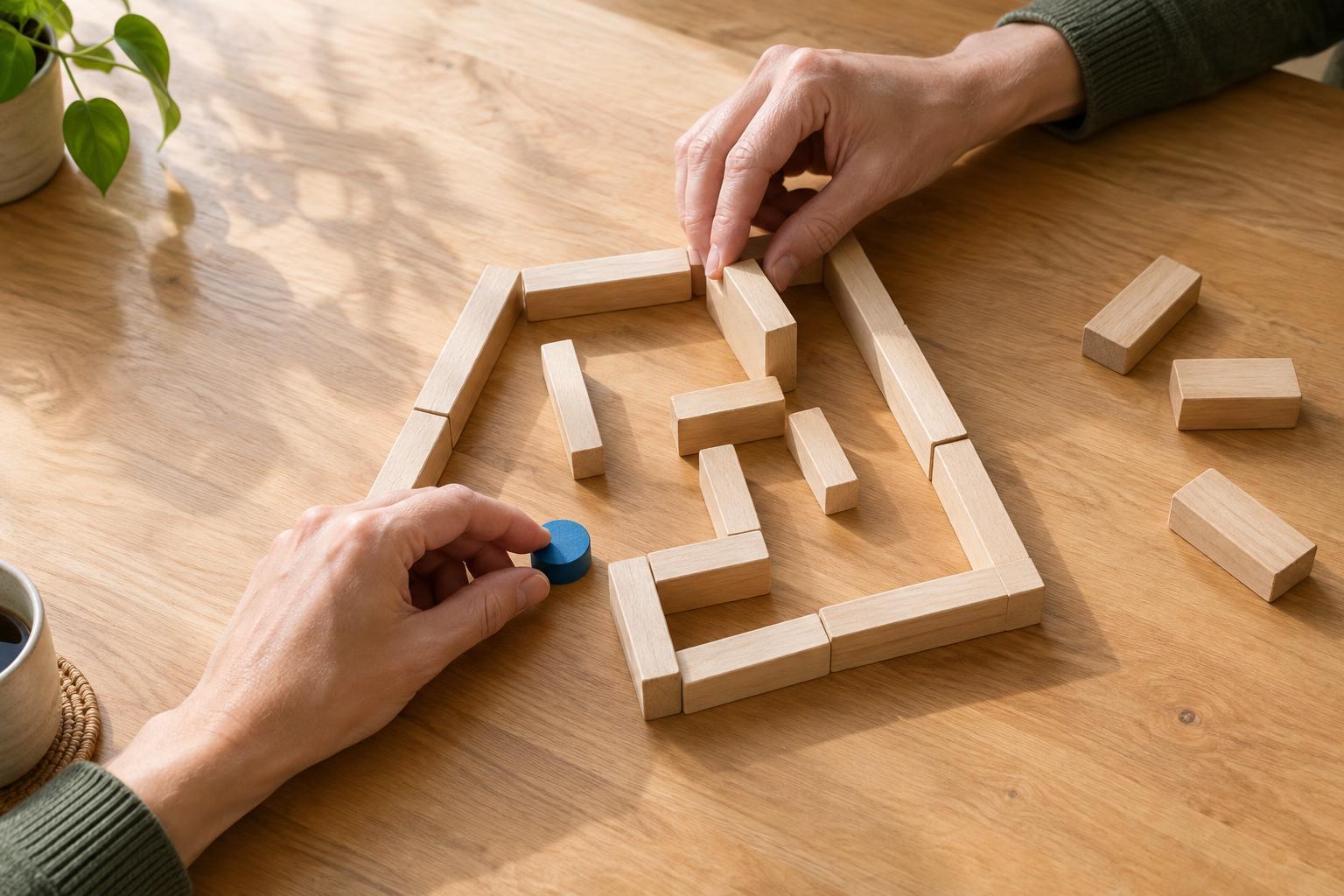
Creative ThinkingWhen a problem feels stuck, try asking how you could make it worse. Deliberately bad ideas can reveal hidden assumptions, likely obstacles and small changes worth testing. Here is a practical way to use inversion without getting trapped in negativity.
Read article · 4 min↗
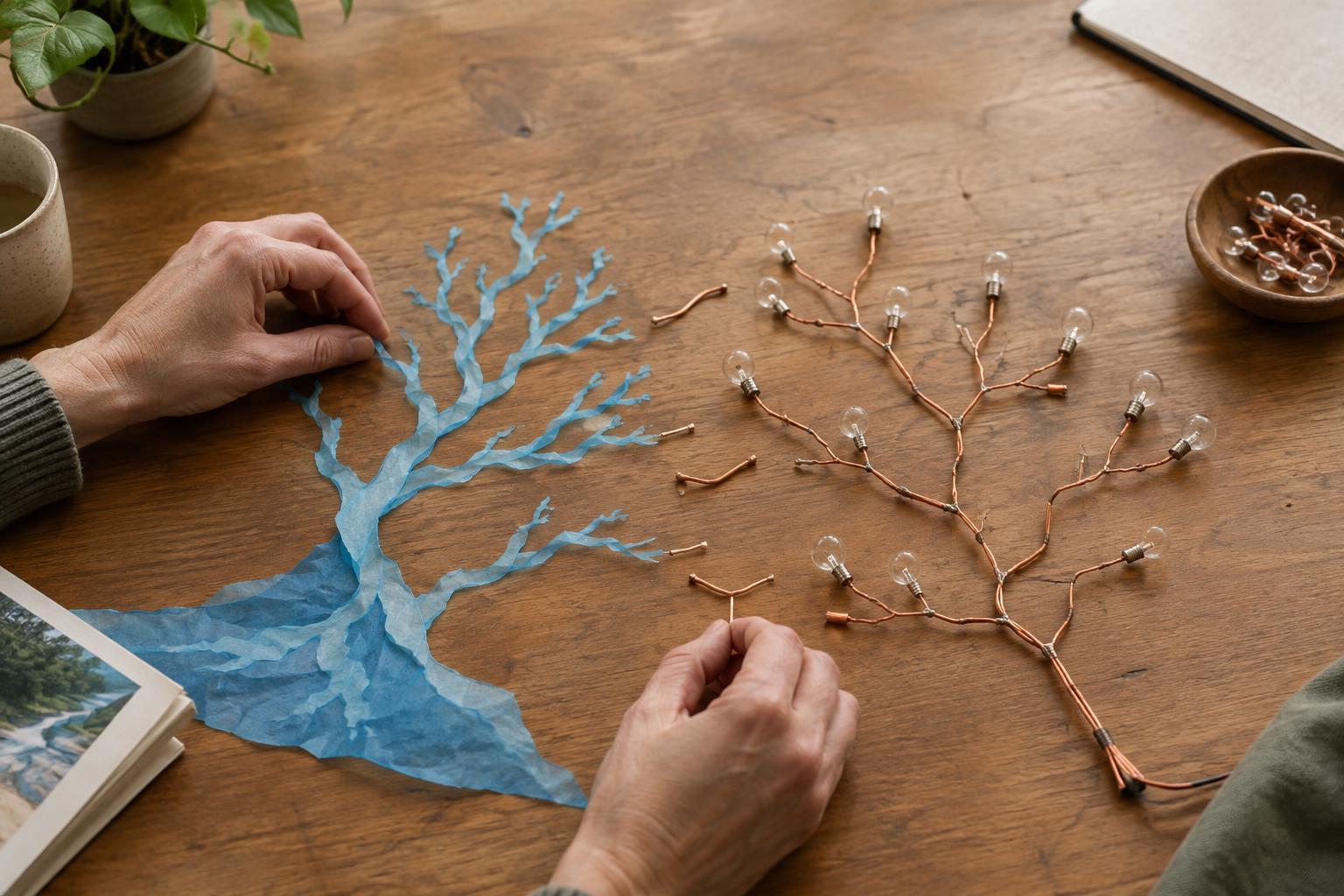
Creative ThinkingA stubborn problem can become easier to see when you compare it with something that works differently on the surface. Learn how to find useful analogies, turn them into small experiments, and recognize when a comparison has reached its limits.
Read article · 4 min↗
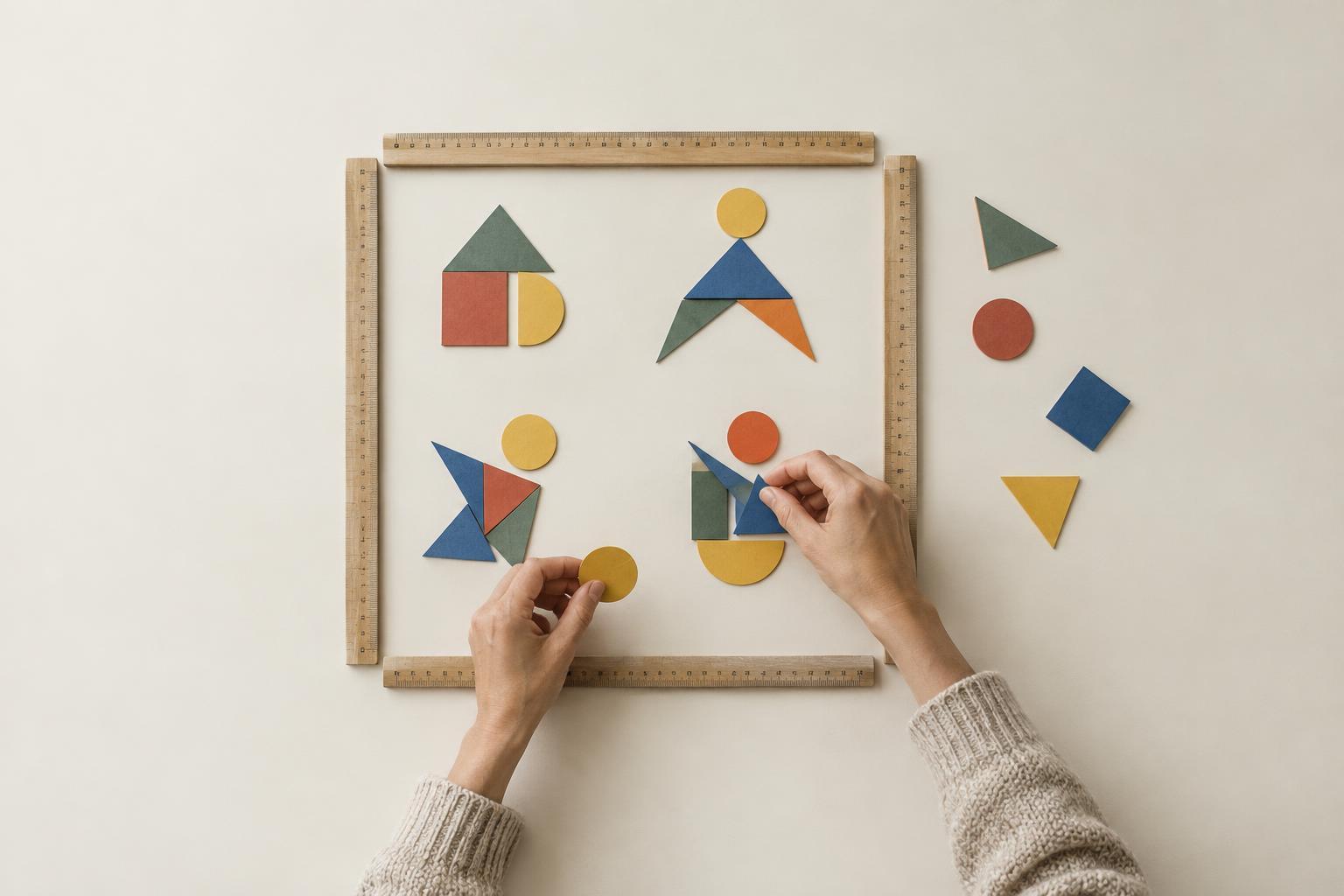
Creative ThinkingA blank page offers endless possibilities, but that freedom can make it hard to begin. Learn how to choose useful limits, generate options within them, and test whether a constraint is helping you think more creatively.
Read article · 4 min↗
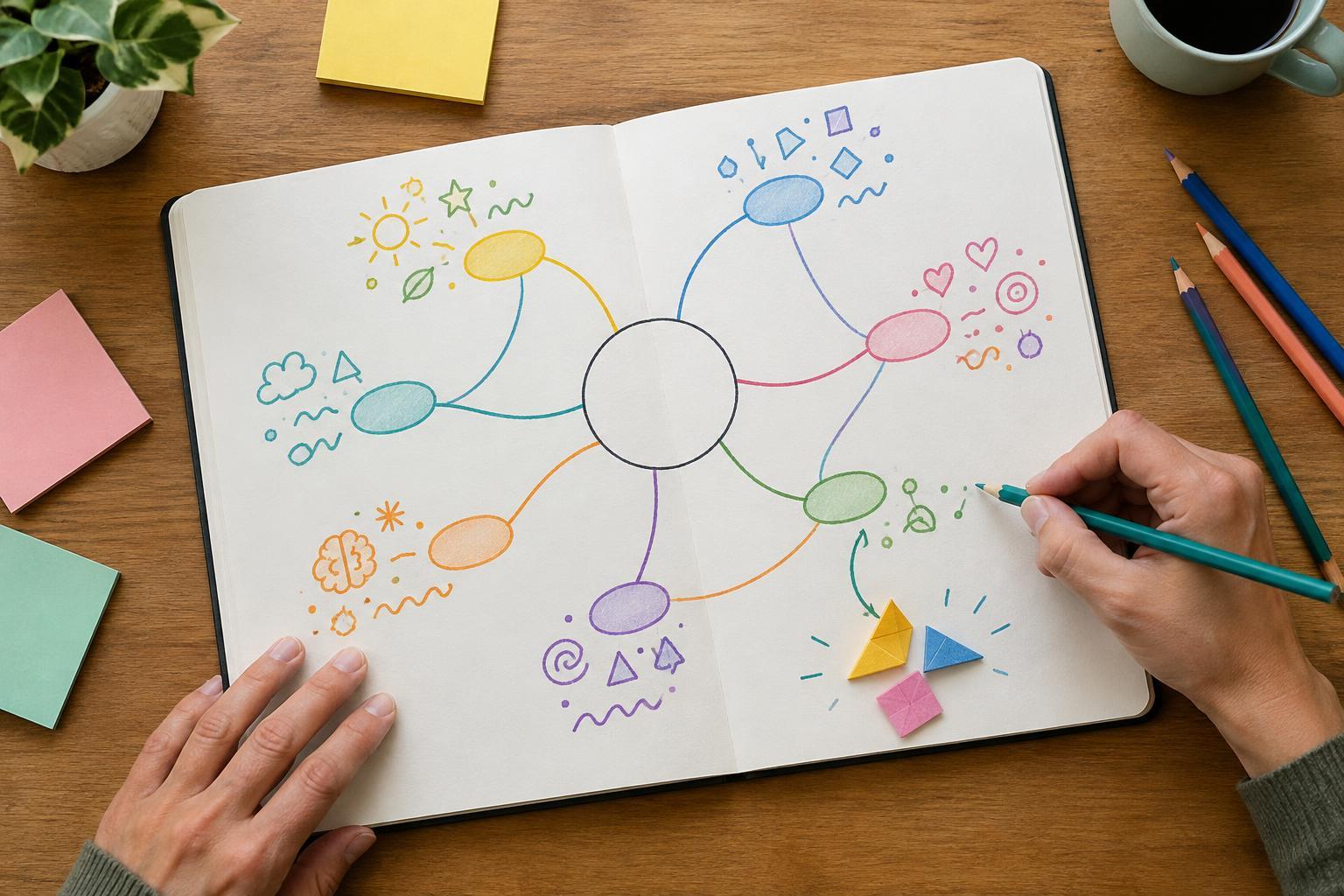
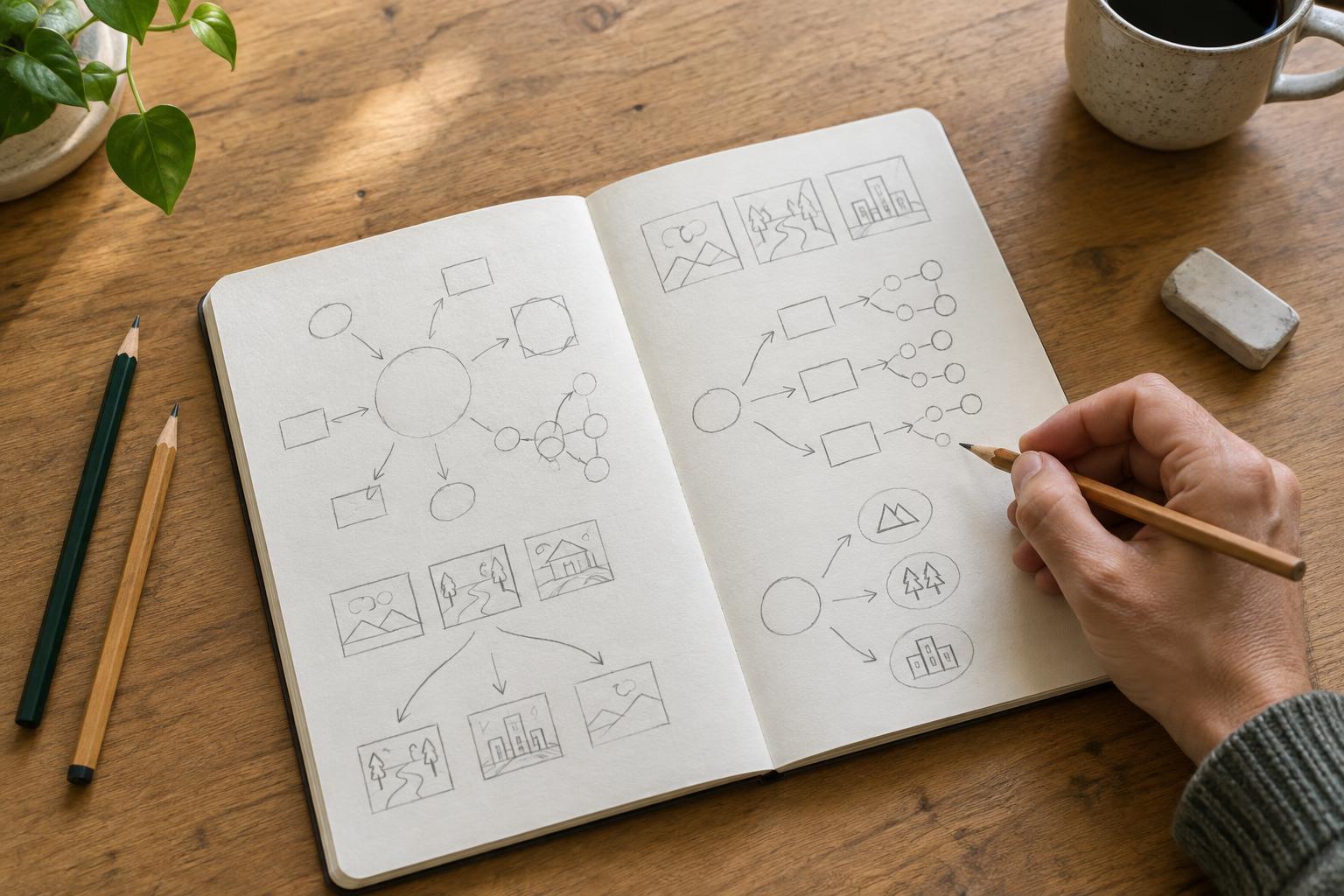
Creative ThinkingA mind map can help you turn a broad creative challenge into possibilities you can see, compare and develop. Learn how to choose a useful central question, branch beyond your first ideas and turn an interesting connection into a small experiment.
Read article · 4 min↗
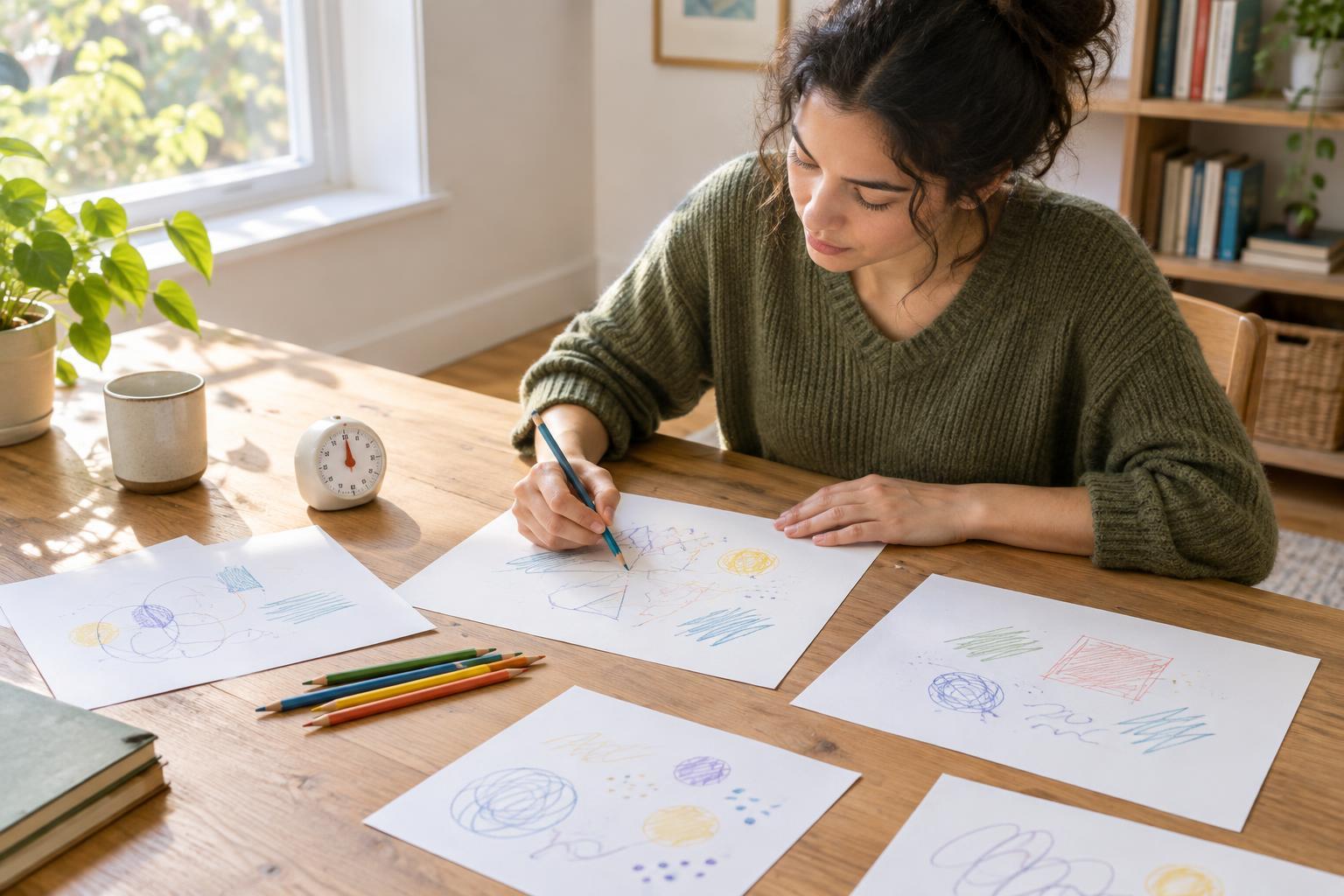
Creative ThinkingWhen you need ideas but have no one to brainstorm with, a short timed session can help you get past the first obvious answers. Use this repeatable exercise to frame a question, generate possibilities without judging them, and choose one small idea to test.
Read article · 4 min↗
Creative ThinkingA vague problem can leave you searching for ideas without knowing what those ideas need to do. Learn a simple process for turning broad frustrations into focused, open-ended questions you can explore and test.
Read article · 4 min↗
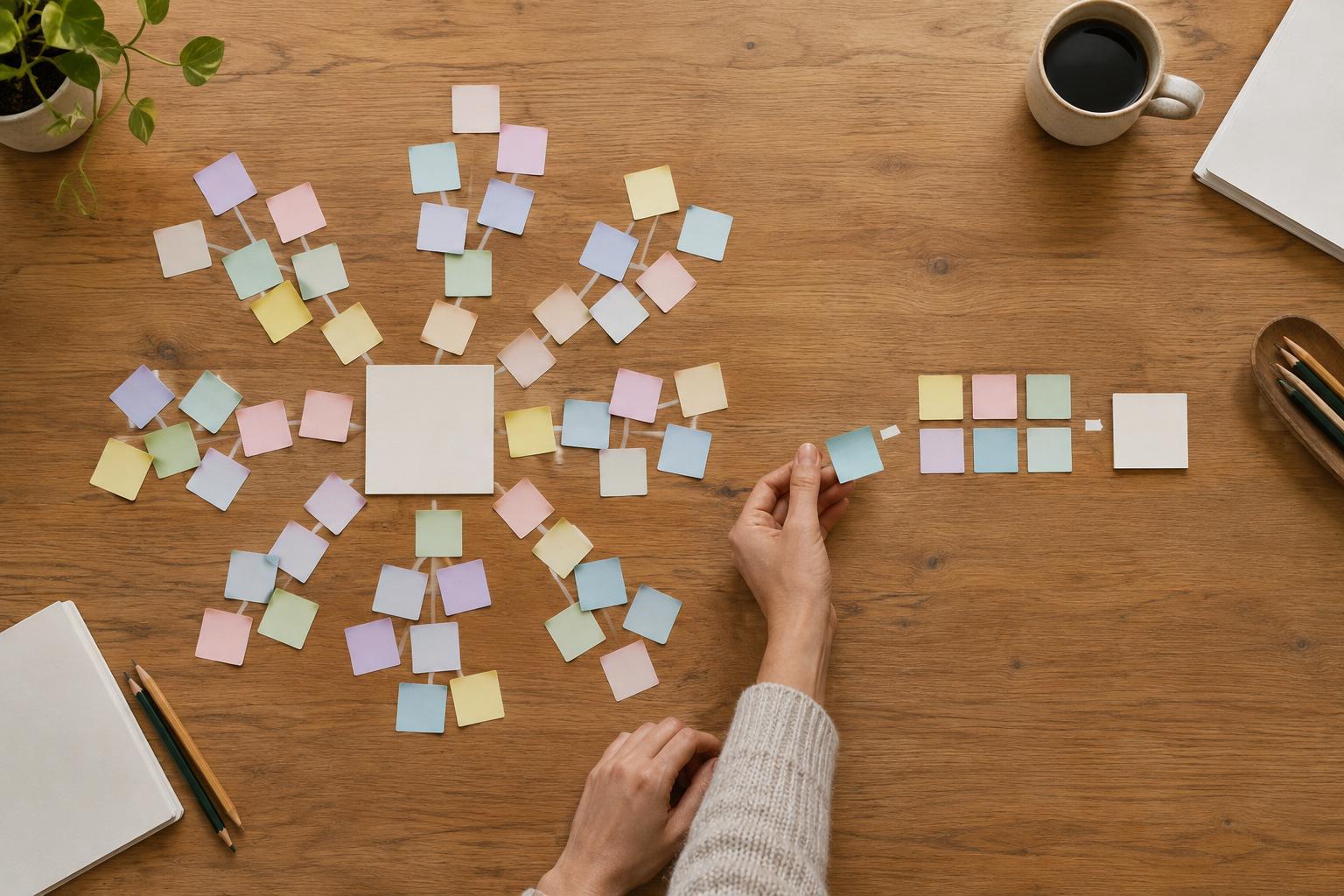
Creative ThinkingGood problem-solving needs room for possibilities and a way to make a decision. Learn how to separate idea generation from evaluation, choose useful criteria, and move between the two when a project changes.
Read article · 4 min↗

Creative ThinkingCreative thinking is not limited to art or sudden flashes of inspiration. It is a way to develop ideas that are both different and helpful for a particular purpose. Learn how novelty and usefulness work together, where creativity appears in daily life, and how to practice it with small, repeatable exercises.
Read article · 4 min↗
 Creative Thinking