Make the idea small enough to test
A creative idea can feel convincing while it exists only in your head. Once someone tries to use it, questions appear: What happens first? Which choice is unclear? What did you assume they would already know? A paper prototype helps you explore those questions without building a finished product. It can be a sketch of an app screen, a set of cards for a game, a folded layout for a guide, or a diagram of a new service.
Begin by choosing one action you want the idea to support. Instead of asking whether a whole study-planning app is good, ask whether someone can choose a task and start a study session. Write that question at the top of a sheet of paper. It will keep your test focused and make it easier to tell which details matter now and which can wait.
Build only what the task requires
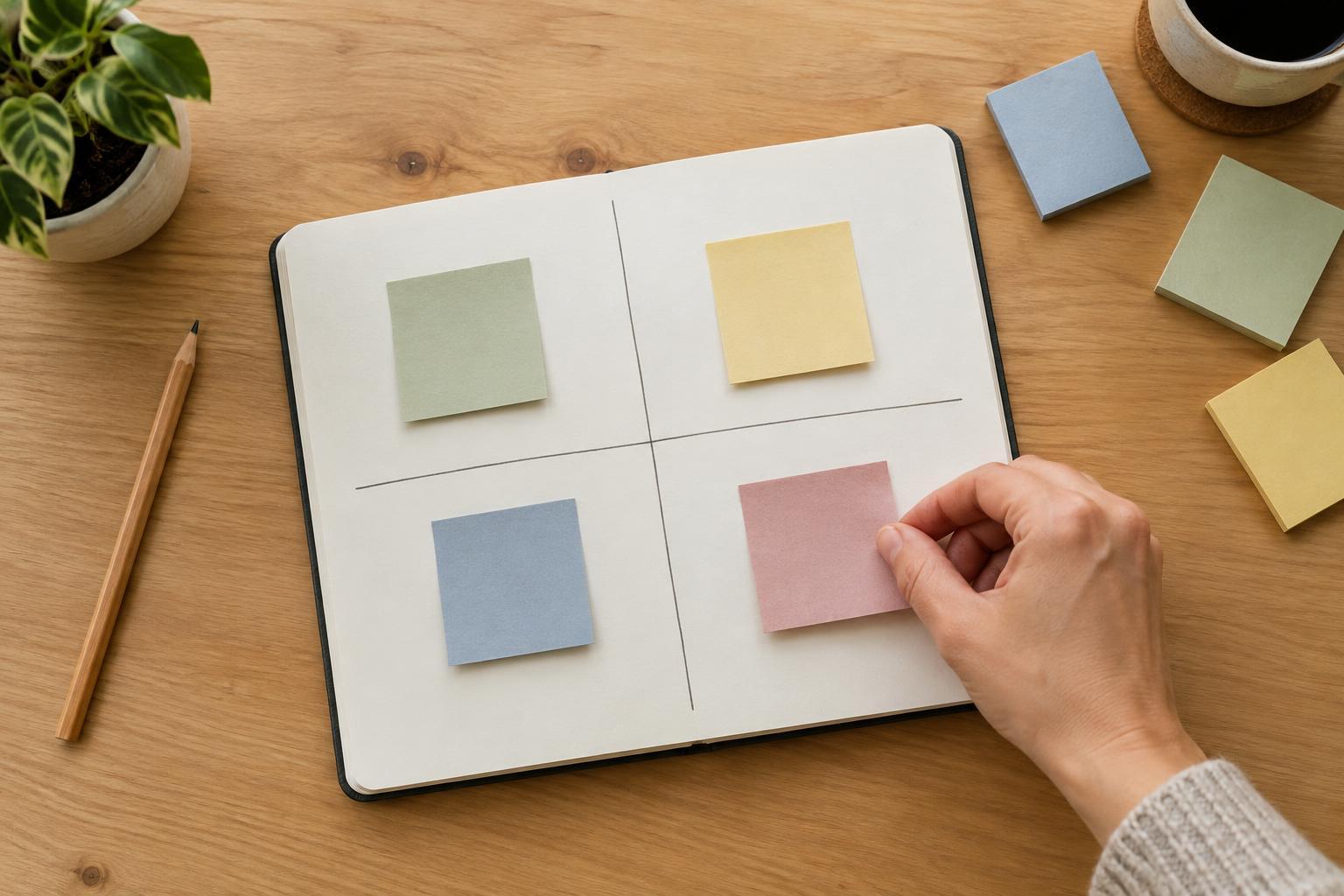
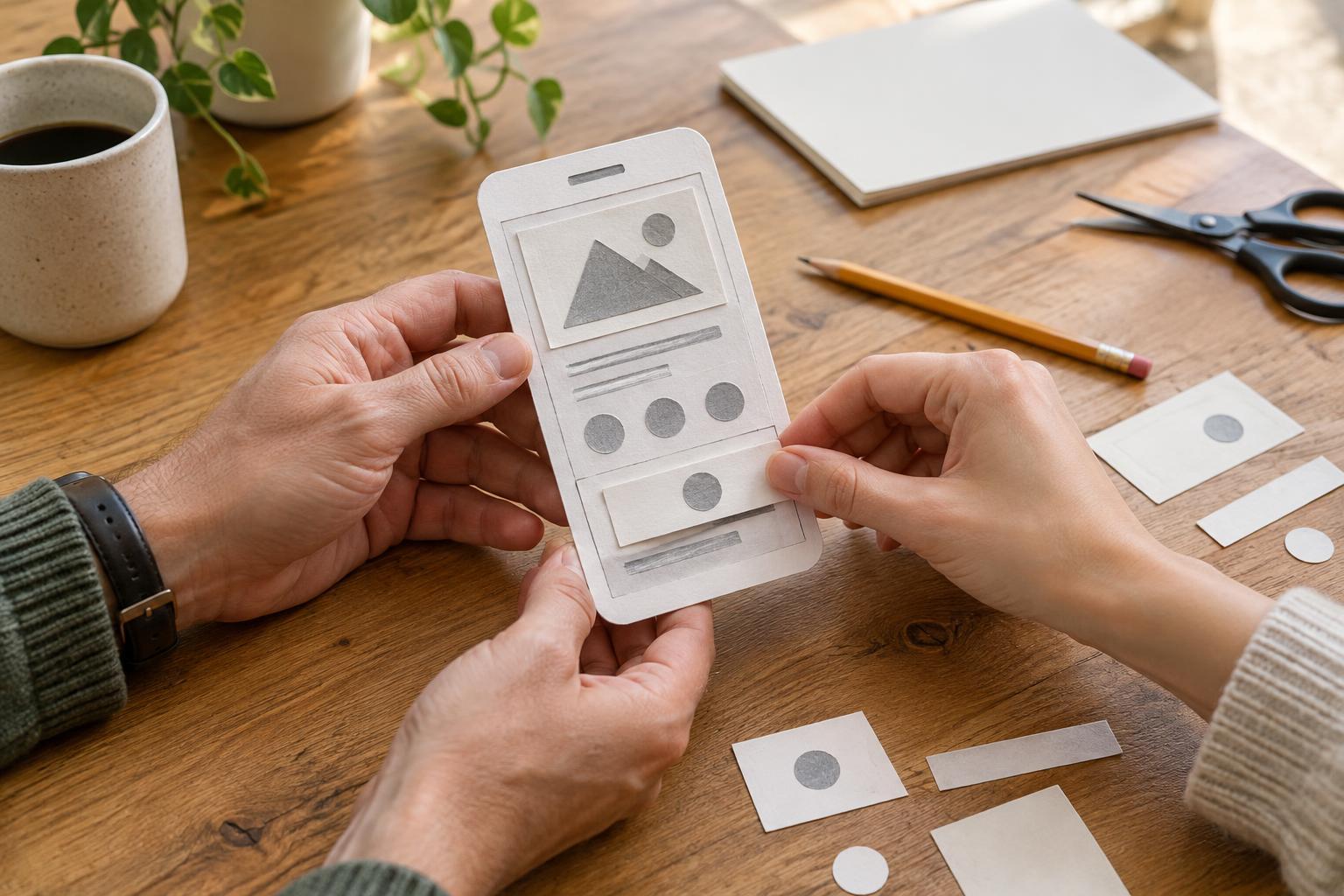
Gather paper, a pen, and, if useful, sticky notes or scissors. Draw the pieces a person would need for the action you chose. For a study-planning app, you might sketch a home screen, a list of tasks, and a session-start screen. Use simple labels and boxes rather than polished artwork. If a button would open another screen, draw that screen on a separate sheet so you can swap it in when the person selects the button.
Leave out features that do not affect the task. A decorative logo, detailed settings menu, or carefully chosen colors may make the prototype look complete, but they can distract you from a basic question such as whether the starting point is clear. When you need to represent content you have not written yet, use a short, realistic example rather than a vague placeholder. The person testing it needs enough information to make a genuine choice.
Give someone a task, then watch
Ask a person who might reasonably use the idea to try one specific task. You could say, “You have twenty minutes to study. Show me how you would choose a task and begin.” Hand over the paper pieces and let them point, move cards, or describe what they would tap. You can act as the prototype by replacing one sheet with another when they make a choice. If you cannot ask someone else, try the task yourself after a break, though another person is more likely to notice assumptions you have missed.
Avoid explaining the design while they work. If they pause, ask what they are looking for rather than telling them where to go. Notice where they hesitate, what they expect to happen, and whether the result matches their expectation. Write down what you see in neutral terms, such as “looked for a start button on the task list,” rather than “did not understand the screen.” After the task, ask which parts felt clear and which left them guessing.
Turn observations into a revision
A test is most useful when it leads to a decision. Review your notes and identify one or two moments that affected the task. If the person found the study task but could not see how to begin, you might move the start action onto the task card. If they expected to set a time limit before choosing a task, you might test a different order. Change the paper version quickly, then ask the same person or someone new to try the task again.
Keep separate notes for observations, interpretations, and possible changes. “Pointed at the timer first” is an observation. “Wants to choose a duration before a task” is an interpretation worth checking. “Put the timer on the first screen” is one possible change, not the only solution. This distinction helps you stay open to alternatives instead of treating your first explanation as a fact.
Use the prototype for the question it can answer
Paper is well suited to testing the order of steps, the clarity of labels, and what someone expects from a choice. It is less suited to judging whether an animation feels smooth, whether a physical object is comfortable to hold, or whether a complex system works reliably. If your idea depends on those qualities, use the paper test to narrow the design question, then choose a more suitable model for the next round.
You do not need a perfect prototype or a large audience to learn something useful. Start with one task and one person, revise what caused trouble, and repeat when you have a new question. The aim is not to prove that your original idea was right. It is to make the idea easier to examine, change, and eventually use.