
Digital ResearchA chart can make a claim feel obvious at a glance. Learn a practical routine for checking its labels, scale, data, and missing context before you rely on what it seems to show.
Read article · 4 min↗

Digital ResearchWhen two pages seem to disagree, the difference may lie in their definitions, evidence, time frames or purpose. Use a simple comparison table to work out what each source actually says before deciding what you can conclude.
Read article · 3 min↗

Digital ResearchSearch snippets can help you find a promising source, but they rarely provide enough context to support a conclusion. Learn how to move from a quick result to a careful reading, trace claims to their sources, and keep useful notes without making every search a major project.
Read article · 4 min↗
Digital ResearchAI-generated search summaries can help you find a starting point, but they can also blur the line between what a source says and what the summary infers. Learn a practical routine for tracing claims, checking context and deciding what you can safely use.
Read article · 4 min↗

Digital ResearchA source log helps you remember where an idea came from, what a page actually says, and when you viewed it. Learn a simple way to record links, claims, access dates, and follow-up questions without turning a small research project into an elaborate filing system.
Read article · 4 min↗

Digital ResearchA scholarly article can change after publication. Learn a repeatable way to look for corrections, retractions, and other notices before relying on an article in your reading or writing.
Read article · 4 min↗

Digital ResearchAn older version of a web page can help you trace a changed explanation, recover context, or check what information was available at a particular time. Learn how to find useful captures, compare them carefully, and keep a clear record of what an archive can and cannot show.
Read article · 4 min↗

Digital ResearchAn image can be genuine yet paired with the wrong place, date, or story. Learn a practical reverse image search routine that helps you trace earlier uses, compare captions, and decide what you can and cannot verify.
Read article · 4 min↗
Digital ResearchA government data table can look straightforward until you notice a footnote, an unfamiliar unit, or an empty cell. Learn a practical routine for checking what each figure measures, whether two rows can be compared, and what missing values do—and do not—mean.
Read article · 4 min↗
Digital ResearchA paywall does not always mean an article is unavailable to you. Learn a repeatable search process for finding publisher copies, repository manuscripts and preprints, while checking that you have the right work and version.
Read article · 4 min↗
Digital ResearchA DOI is a persistent identifier for a research item. Learn how to recognize one, use it to find an article, and check that the result is the version you need.
Read article · 4 min↗


Digital ResearchDate filters can help you find recent information, but they can also hide older explanations, original documents and useful background. Learn a simple search routine that checks what is new without losing what still matters.
Read article · 3 min↗
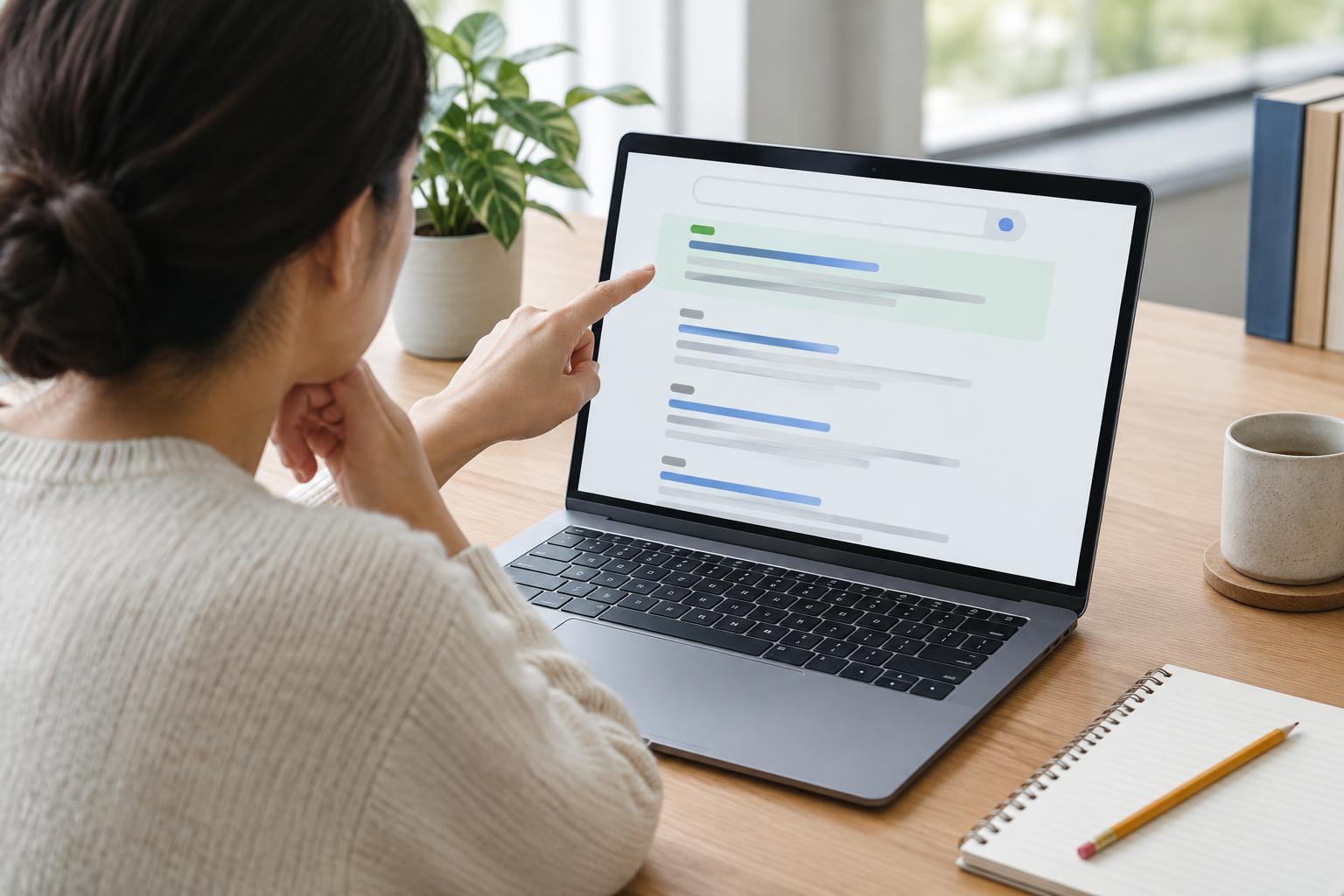
Digital ResearchSearch pages mix paid placements with results selected by a search engine’s ranking system. Learn how to spot sponsorship labels, look beyond a result’s position, and choose sources that fit your research question.
Read article · 4 min↗

Digital ResearchAn author bio can be useful, but it is not proof of expertise. Learn a practical way to check an online writer’s relevant experience, institutional ties, evidence and possible incentives before deciding how much weight to give an article.
Read article · 4 min↗

Digital ResearchA polished page can still leave important questions unanswered. Lateral reading helps you evaluate a website by briefly leaving it: identify who is behind it, compare its claims with independent sources, and trace evidence back to its original context.
Read article · 3 min↗

Digital ResearchA precise-sounding number can change meaning as it moves from a report to an article, a slide or a social post. Learn a practical way to follow a statistic back to its source, check what was actually measured and keep a useful record of what you find.
Read article · 4 min↗

Digital ResearchA source’s role depends on your question, not just its format. Learn how to distinguish firsthand evidence, interpretation, and overview material online—and how to use each one when researching a topic.
Read article · 4 min↗

Digital ResearchA search engine, a library catalog, and an academic database can all help you research a question, but they lead to different kinds of material. Learn what each tool does best, where it falls short, and how to move between them without losing track of your question.
Read article · 4 min↗

Digital ResearchSearch operators can help you narrow a broad question, find a particular phrase or explore a specific site. Learn a practical sequence for using them without overlooking useful results.
Read article · 3 min↗

Digital ResearchA useful search starts before you type. Learn how to break a research question into key concepts, choose alternative terms, adjust the scope of a query, and use early results to find better words for the next search.
Read article · 4 min↗

Digital ResearchA search engine does not examine the entire web each time you type a question. Learn the basic steps behind crawling, indexing and ranking, then use that knowledge to search more effectively and judge results with care.
Read article · 4 min↗