Draw to think, not to impress
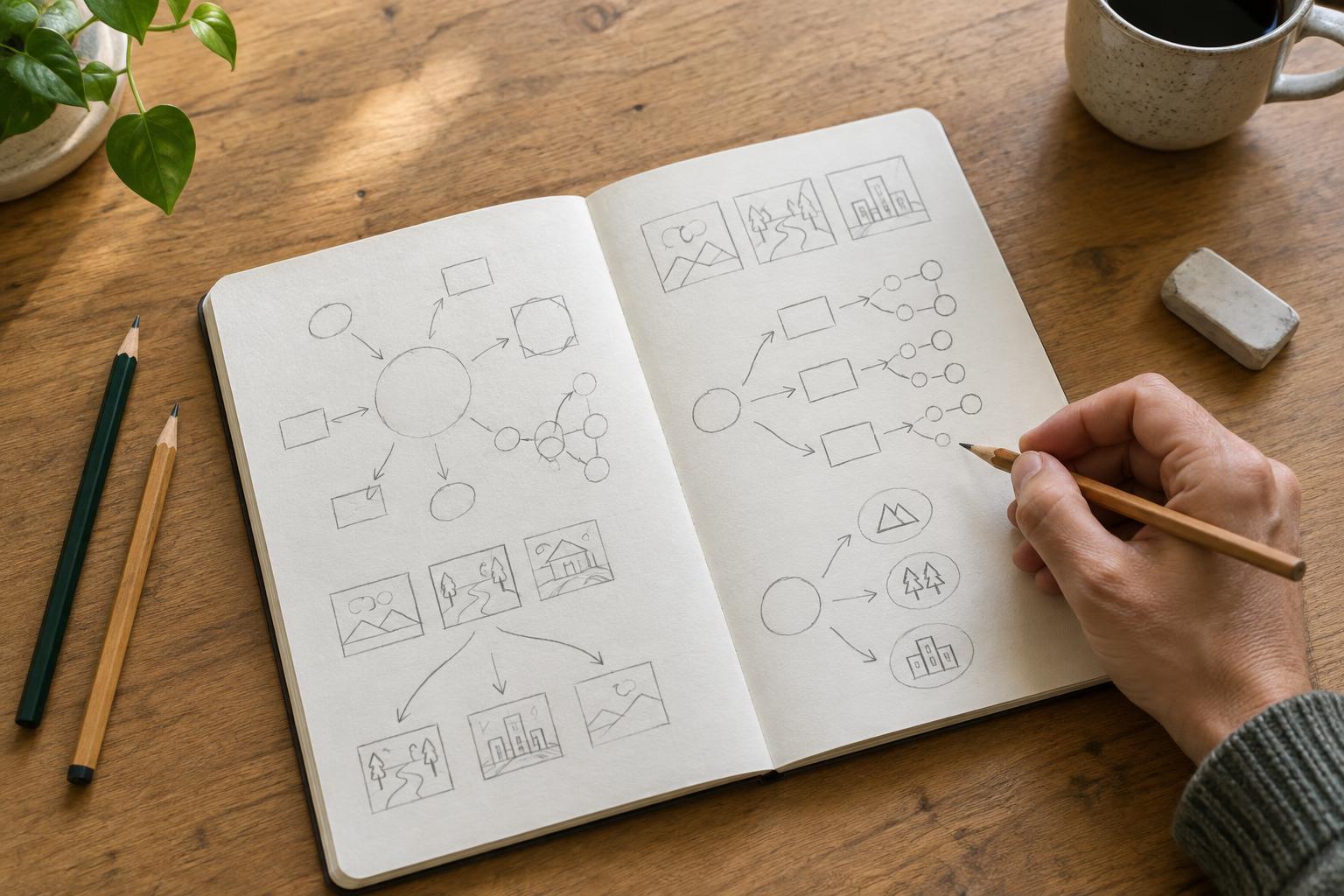
When a problem feels tangled, writing another list may not help. A sketch gives you room to place parts of the problem next to one another, connect them and notice what is missing. The drawing does not need to look like anything you would display. Boxes, circles, arrows, stick figures and a few words are enough.
Suppose you want to make time for a personal learning project. You could write “I am too busy” at the top of a page and stop there. Or you could draw a rough map of your day: a circle for work, boxes for recurring tasks and a star for the project. Where does the star fit? Which tasks compete for the same time? The sketch may not solve the scheduling problem, but it can turn a vague frustration into questions you can examine.
Start with the simplest possible marks
Choose one problem you can describe in a sentence. Put that sentence at the top of a blank page. Then give yourself five minutes to draw its main parts without erasing. Use a box for a task or object, a circle for a person or group, and an arrow for a movement, dependency or exchange. If you are unsure what something looks like, write its name inside a shape.
For example, if you are trying to organize a neighborhood book swap, you might draw boxes labeled “books,” “drop-off,” “sorting” and “pickup.” Arrows show how books move between them. A question mark beside “storage” marks an unresolved detail. You are building a working model, not an illustration. Labels make the marks useful even if every box is crooked.
Keep a little empty space around the edges. As you draw, you may remember a constraint or discover another participant. Add it where it belongs. If the page becomes crowded, start a fresh version rather than trying to make the first one neat.
Use different sketches for different questions
A map is helpful when you need to see relationships. Draw the people, resources and tasks involved, then connect the ones that affect each other. An arrow can show a sequence; a line without an arrow can show a two-way relationship. Mark uncertain connections with a question mark instead of treating a guess as a fact.
A sequence of small frames works better when timing matters. Draw three or four boxes for “before,” “during,” “after” and “what could go wrong.” If you are planning a study session, the frames might show choosing a question, reading for an answer, closing the source and explaining the answer from memory. The frame where you get stuck points to a step worth revising.
When you need ideas rather than a process, try drawing several versions of the same thing. Sketch four possible layouts for a desk, or four ways to explain a concept to a friend. Spend no more than a minute or two on each. Making multiple rough options can keep you from polishing the first idea before you have considered others.
Ask the page what it reveals
Once you have a sketch, pause before fixing it. Look for crowded areas, long chains of arrows, missing links and shapes that carry too many responsibilities. These are prompts for questions, not proof that something is wrong. Does one step depend on information you do not have? Is a person expected to do several things at once? Have you drawn the outcome you want, or only the obstacles?
Add notes in a different color or place brackets around what you could change. In the book-swap sketch, you might notice that every book passes through one volunteer’s home. That suggests a question: could books be sorted at the drop-off point instead? Draw that alternative beside the first version. Comparing two visible arrangements is often easier than holding both in your head.
Turn a rough drawing into a small test
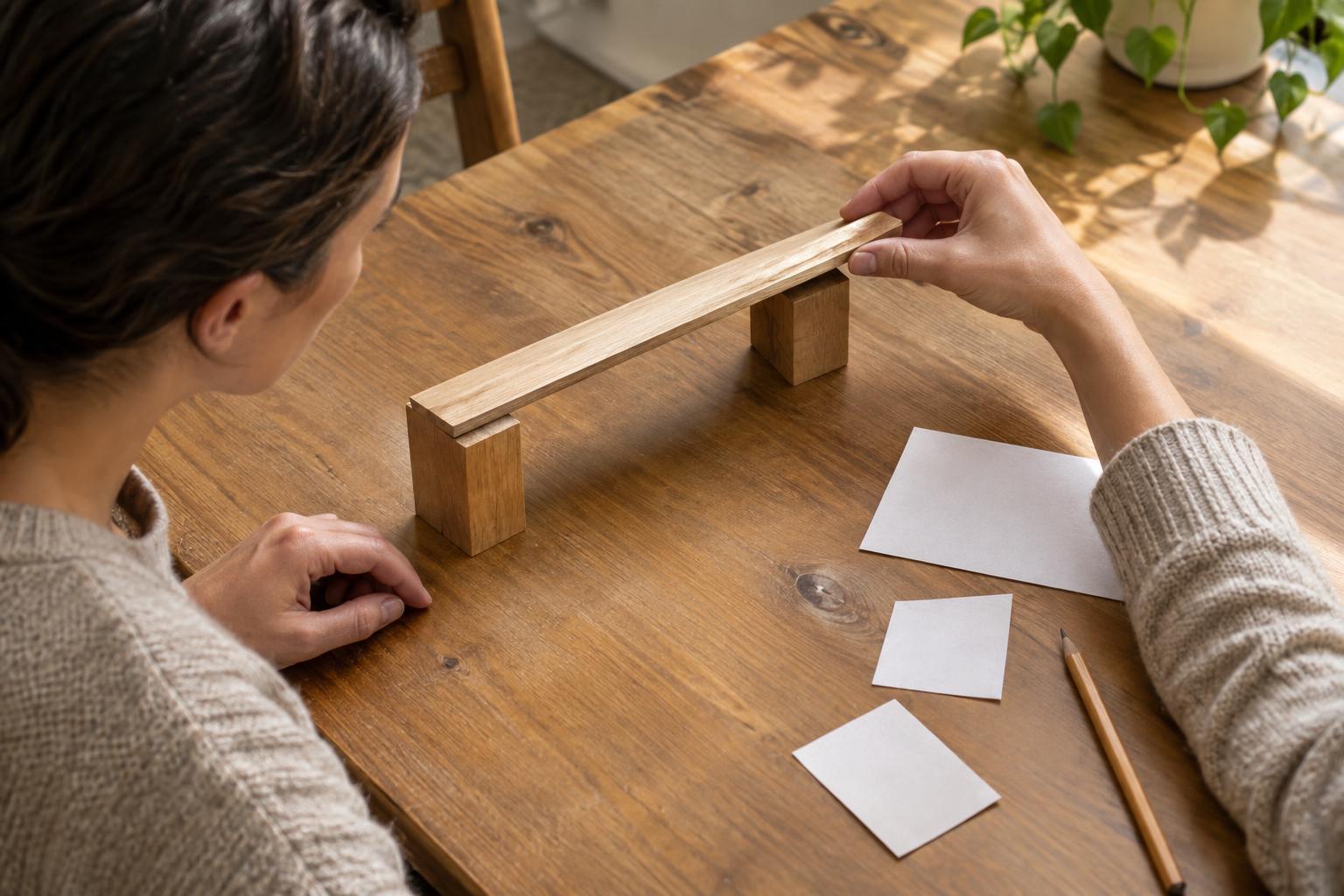
A sketch is most useful when it leads to something you can try. Circle one uncertain part of your drawing and choose a small way to learn more. For the book swap, you might ask a potential volunteer to walk through the proposed drop-off steps, or make a tabletop mock-up with slips of paper representing books. For a personal schedule, you might try one planned study slot before rearranging the whole week.
After the test, return to the page. Cross out an assumption that did not hold, add a step you overlooked or draw a second version. Keep the earlier sketch if it helps you remember why you changed course. The aim is not to arrive at a perfect picture. It is to make your thinking visible enough that you can question it, share it and take a sensible next step.