Pause before you reread
You reach the bottom of a page and realize you cannot say what it was about. The temptation is to go straight back to the top. Sometimes that works, but an automatic reread can repeat the same problem: your eyes move over familiar sentences while the meaning remains unclear.
First, look away from the page and ask yourself a small question: “What, if anything, did I understand?” You might remember the topic, an example or a change in a character’s mood. Say it in your own words, even if the answer is incomplete. This gives you a starting point and helps you distinguish a page that was partly confusing from one you barely attended to.
Next, consider what happened while you read. Did your attention drift, or were you focused but unable to follow the ideas? If you were distracted, a slower reread in a quieter setting may be enough. If you were attentive, the problem may be a missing definition, a difficult sentence or a connection the author left implicit.
Find the first place you lost the thread
Rather than rereading the entire page at once, scan it for a point you can explain. Start with the opening sentence or paragraph and move down until you reach one that no longer fits your understanding. The difficulty often begins earlier than the sentence that made you notice it. For example, an unfamiliar term introduced near the top may make the final paragraph feel impossible.
At that point, mark the exact word, sentence or transition that troubles you. Ask a specific question: “Who does ‘they’ refer to?” “Is this an example or the main claim?” “Why does this conclusion follow?” A precise question is easier to work with than “I don’t get it.” If you cannot identify a single trouble spot, try describing the job of each paragraph in a few words: introduces a problem, offers an example, raises an objection or explains a result.
Repair one connection at a time
Once you have a question, use the surrounding text before looking elsewhere. A heading may tell you what role the page plays in the chapter. The previous paragraph may define a term or introduce the person referred to later. In a textbook, a diagram or worked example may show what an abstract sentence is describing. In a story, checking who spoke last or what a character wants may restore the scene.
Try turning a dense sentence into two or three simpler ones. Identify what it says is happening, to whom or what, and why that matters. If a key word remains unfamiliar, look it up or check whether the author defines it nearby. Then return to the sentence and test the meaning in context. Avoid collecting explanations for every unfamiliar word; concentrate on the ones that block your understanding of the page.
If the page assumes knowledge you do not have, write down the missing question. You may need a short detour to an earlier section or a basic explanation of the concept. Keeping that detour narrow makes it easier to return to your reading.
Check understanding with a short retell
After you repair the confusing part, cover the page and give a brief retell without borrowing its wording. For an informational text, try: “The author is explaining ___, using ___, to show ___.” For fiction, name what changed in the scene and what you expect the change might lead to. Your retell does not need to be polished. Its purpose is to reveal whether you can connect the parts.
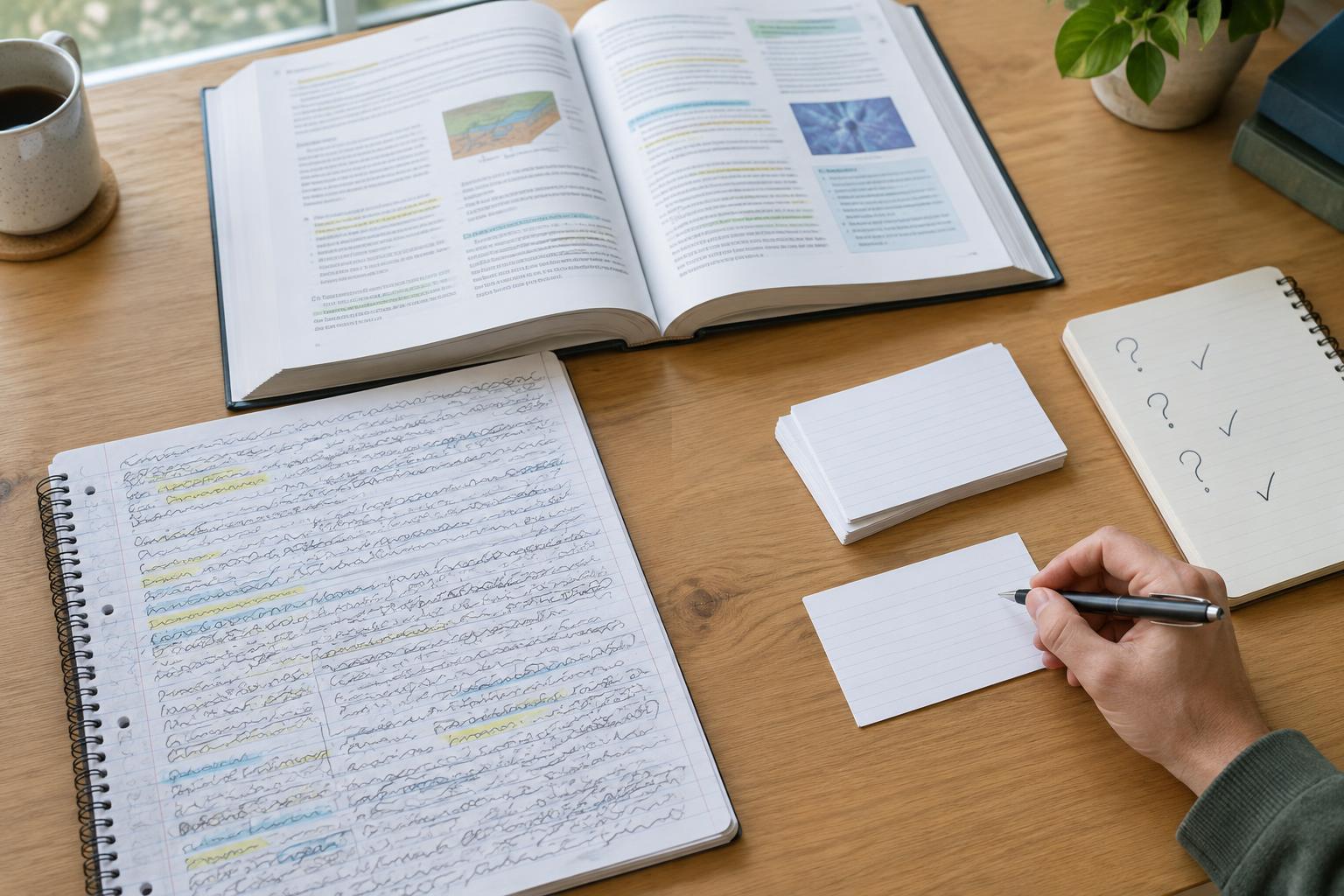
If you can explain the main point but not every detail, you may be ready to continue. Some passages become clearer after the next page supplies an example or consequence. Put a small question mark beside the unresolved detail and read on for a limited stretch. If that detail becomes essential, return to it. If your retell still consists of disconnected phrases, pause and locate the missing link before moving further.
Adjust your approach when it keeps happening
One confusing page is a local problem; repeated confusion may call for a change of method. Try shorter reading intervals, stop after each section to state its main idea, or preview headings before you begin. For demanding material, keep a small list of terms and questions so you do not have to hold every uncertainty in your head. If fatigue or distraction is the main obstacle, a break may help more than another reread.
You can also change your immediate goal. On a first pass, aim to understand the broad argument or sequence of events; on a second, examine the details that matter to your purpose. Not every page needs the same depth of attention. What matters is noticing when meaning has slipped away and making a deliberate choice: clarify a point, read a little further or step back and build the background you need.