Start with the reading you actually do
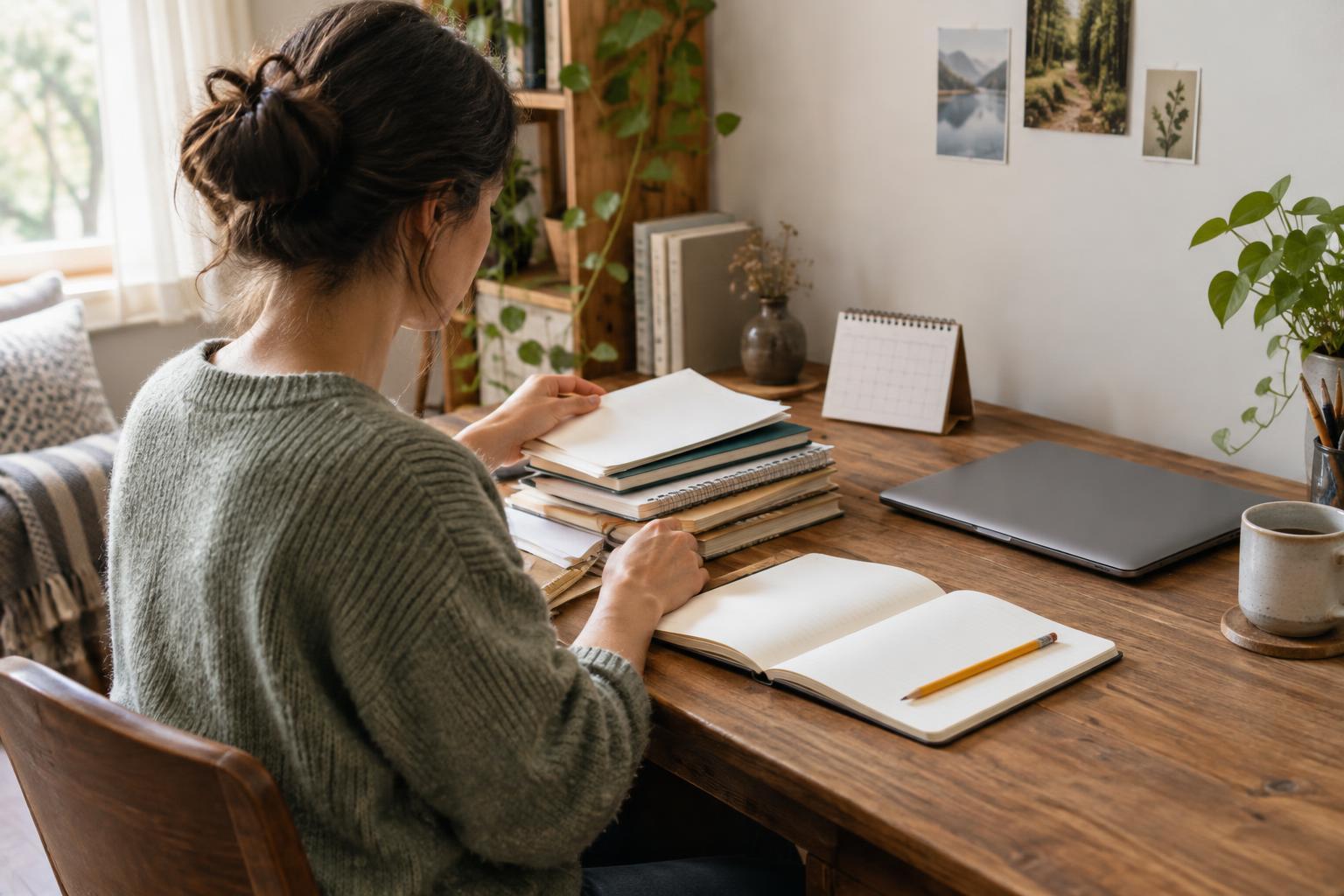
The best reading spot is not necessarily the quietest or most attractive corner of your home. It is a place where you can do your usual reading without repeatedly moving furniture, searching for supplies, or struggling to see the page. Before changing anything, think about the task. Reading a novel with few notes may call for a comfortable chair; working through a textbook may call for a firm surface where you can write.
Try a short session in a spot you already use. Notice what interrupts the physical task of reading: Is there nowhere to set the book down? Do you lean forward to reach your notes? Is the screen or page at an awkward angle? Write down one or two problems you can change. This gives you a more useful starting point than trying to assemble an ideal setup all at once.
Make the page easy to see
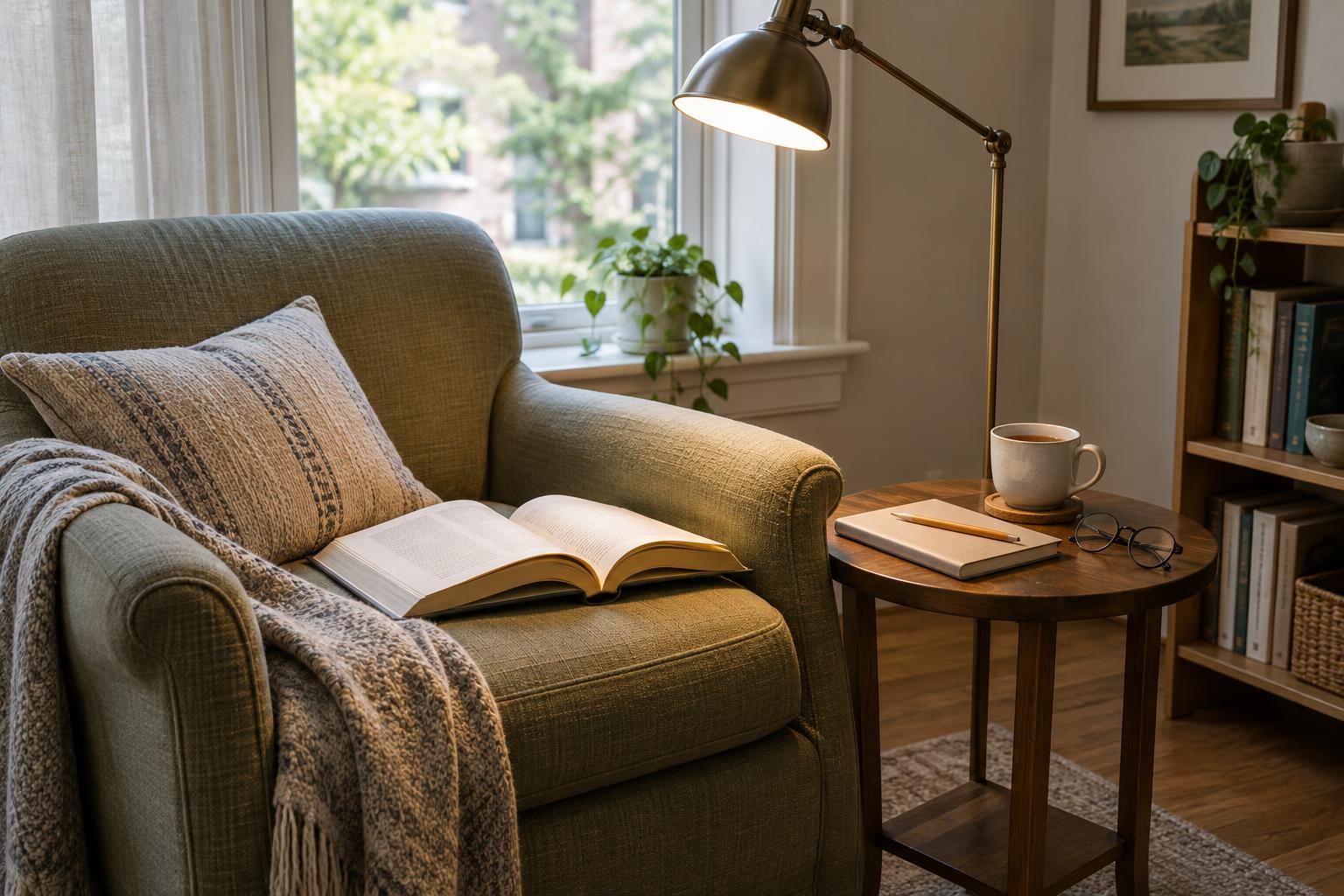
Good lighting is light that lets you read comfortably in your chosen position. Check the page at the time you usually read, since a spot that works in daylight may feel different in the evening. If you use a lamp, try moving it or changing its angle before deciding you need another one. The aim is to illuminate the text without casting a shadow across it or directing a bright bulb toward your eyes.
Screens bring a different challenge: reflections can make text harder to see even when the room seems bright enough. A small change in the angle of the screen or your seat may help. If you are considering ways to arrange light around a reading chair or desk, browse Home Lighting · Space and Surface for ideas to adapt to your own space. You do not need a dedicated study room; the goal is simply to make your regular reading position workable.
Give each essential item a place
A reading space becomes easier to reuse when you can begin without gathering everything again. Keep only the items you regularly need nearby: perhaps a pencil, a notebook, a bookmark, and the current book. If you read at a shared table, a small tray or bag can serve the same purpose as a permanent desk. It lets you put the space back to everyday use without scattering your materials.
Decide where unfinished work will go at the end of a session. A shelf, folder, or container can hold the current book and notes together, while completed materials move elsewhere. If you are looking for ways to keep supplies contained in a shared or small space, browse Storage Solutions · Space and Surface for storage ideas. Choose an arrangement you can maintain in a minute or two; a complicated system may be less useful than a simple place to put things down.
Test the setup before adding more
Use the space for a few real reading sessions before buying equipment or reorganizing the room. At the end of each session, ask a practical question: What did I have to stop reading to fix? You might discover that a cushion helps more than a new chair, or that moving your notebook to the other side of the table makes writing easier. Change one thing, then see whether it helps during the next session.
Your needs may also vary by task. You might read casually in one spot and do detailed note-taking in another. There is no requirement to force both activities into the same arrangement. A successful reading space is one you can enter, use, and leave without much preparation—and one you can adjust when your reading habits change.