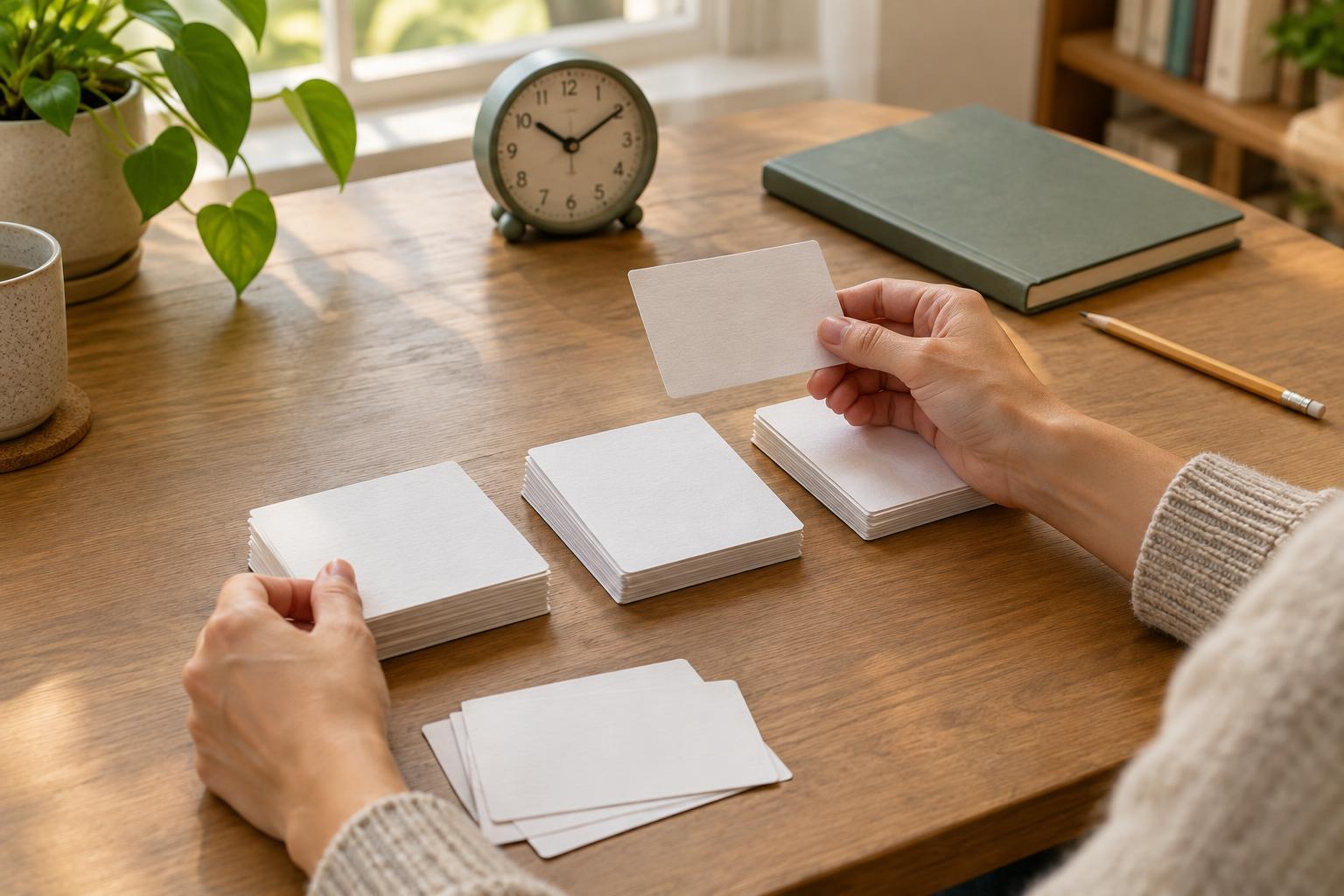
What spaced repetition does
Learning a word once rarely means you can recall it later, especially when you need it during a conversation. Spaced repetition is a way to revisit vocabulary over time rather than repeating it many times in one sitting. You test yourself on a word, check the answer, and bring it back for another review after an interval. Words that feel difficult return sooner; familiar ones can wait longer.
The aim is not to follow a perfect schedule. It is to make remembering an active task and give yourself repeated chances to do it. You can use an app, paper cards or a notebook with dated review lists. Pick a method you will be comfortable opening regularly. A simple routine you keep is more useful than an elaborate one you abandon.
Choose words you have a reason to learn
Start with vocabulary you meet in a book, lesson, show or conversation, or words you wish you could use yourself. A personal reason to learn a word makes it easier to place in a meaningful sentence. You do not need to save every unfamiliar word. If a word seems unlikely to come up again and is not important to your goal, you can leave it for now.
Keep new additions manageable. Five useful words from a reading session may give you plenty to practise, particularly if you include pronunciation and example sentences. As you build a collection, notice whether you have time to review older cards before adding more. If reviews are piling up, pause new cards rather than turning every session into a race.
Make cards that ask one clear question
A good card makes you try to recall something before showing the answer. For recognition practice, put the word or a short phrase on the front and its meaning on the back. For production practice, put a meaning or a sentence with a missing word on the front, then supply the word yourself. These are different skills: recognising a word on a page may come well before finding it while speaking.
Give each card enough context to prevent confusion. If you are learning a verb, include a short sentence showing how it is used. For a word with several meanings, make separate cards for meanings you actually encounter. You can add a pronunciation note or audio if that helps, but avoid putting so much information on one card that you cannot tell whether you remembered it. When a card repeatedly causes trouble, rewrite the prompt or split it into smaller cards.
Build a review rhythm you can adjust
In a review session, look at the prompt, make a genuine attempt to answer, and only then turn over the card. Say the answer aloud if speaking is part of your goal. Check more than a vague sense of familiarity: could you give the meaning, form or usage the card asks for? If you missed an important part, mark the card for an earlier review. If you recalled it comfortably, let more time pass before seeing it again.
As a starting point, you might review a new word later the same day, then after a day, a few days and a week, lengthening the gaps when recall feels reliable. Treat those intervals as an example, not a rule. An app may handle scheduling for you; with paper cards, you can sort words into a frequent-review pile and less-frequent piles. If you miss a day, simply resume. Spending your next session reviewing overdue cards is usually more helpful than starting over.
Move beyond the cards
Cards help you practise recall, but they cannot replace meeting words in natural language. After reviewing, choose two or three words and write sentences that relate to your life. Check whether the sentence matches the way you first saw the word used. You might also look for the words in your next reading or listening session, or try one in a low-pressure conversation.
Pay attention to what happens outside your review sessions. If you recognise a word but cannot use it, add a production card or practise a useful phrase containing it. If two similar words keep getting mixed up, write contrasting examples instead of reviewing the same definitions again. Spaced repetition works best as part of a learning loop: encounter a word, practise recalling it, use it in context, and adjust your cards as your understanding grows.