Start with a purpose, not a pace
Reading efficiently does not always mean reading quickly. If you need one date from a long document, reading every sentence is unnecessary. If you need to explain an argument, racing through the headings will not be enough. Before you begin, ask: What do I need to know when I finish? Your answer helps you choose between skimming, scanning, and close reading.
These approaches are not measures of how serious a reader you are. They are tools for different jobs, and you can switch between them on the same page. A textbook chapter might call for a quick overview first, a search for a key term second, and careful attention to one difficult passage last. Choosing deliberately helps you spend your attention where it matters.
Skim to build a map
Skimming helps you grasp a text’s subject, structure, and main direction without trying to absorb every detail. It is useful when deciding whether an article is relevant, previewing a chapter before study, or returning to material you read earlier. Look at the title, introduction, headings, opening and closing sentences of sections, and any summaries or examples that stand out. Ask yourself what question each section appears to answer.
Keep your expectations modest. After skimming, you should be able to say what the text seems to cover and where its major ideas are located. You may not yet know whether the evidence supports its conclusions. If you find yourself treating a skimmed paragraph as proof of a precise claim, slow down and read that part more carefully.
Try a short exercise with a chapter you have not studied. Preview its headings, then write a one-sentence prediction of its main point and two questions you expect it to address. As you read further, check those predictions. The aim is not to guess perfectly; it is to give your attention a useful starting point.
Scan when you know what you are looking for
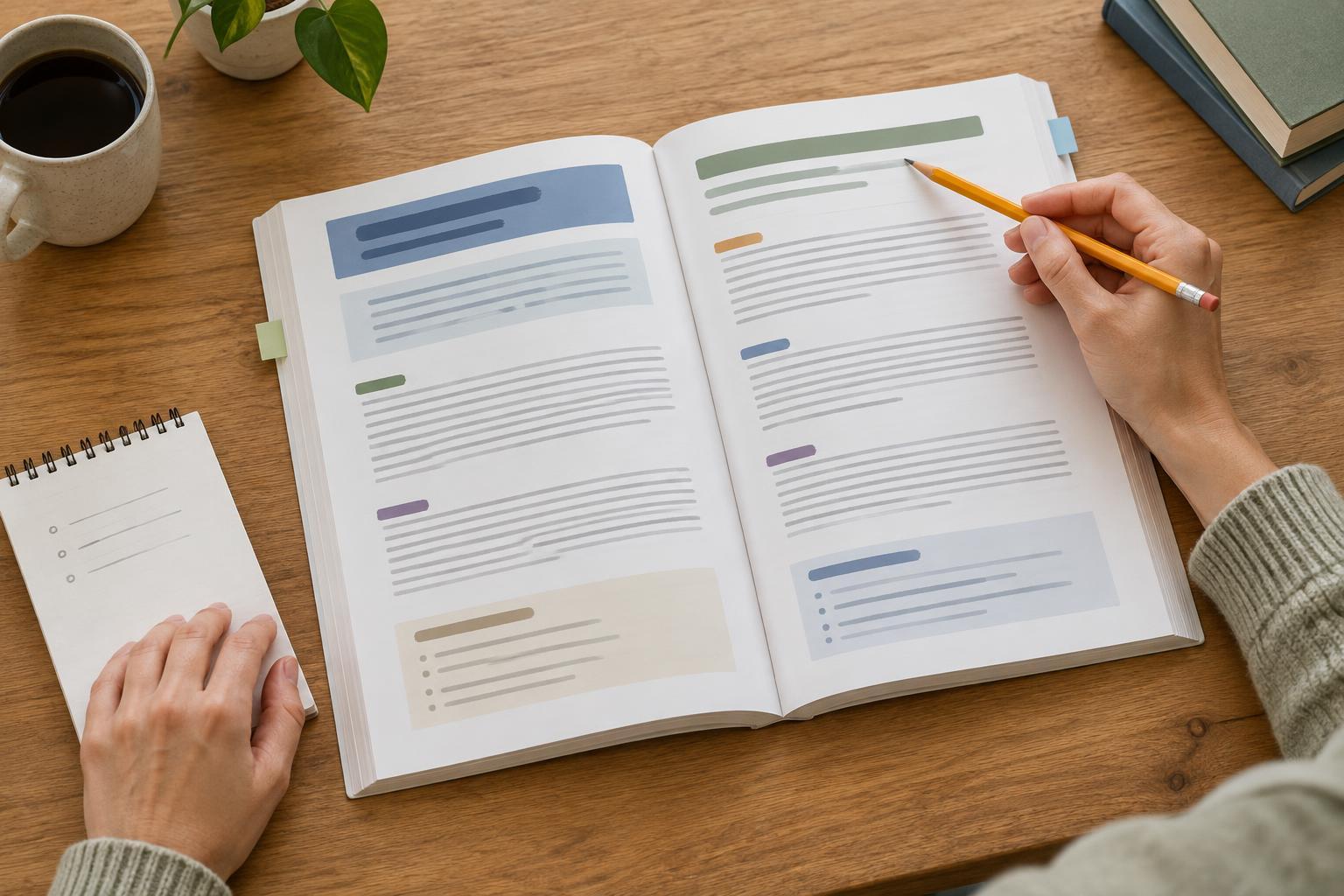
Scanning is a targeted search for a particular item: a definition, name, example, formula, instruction, or phrase. Rather than following the argument from beginning to end, let your eyes move across the page for visual clues. Headings, bold terms, numbers, and repeated keywords can help. If you are reading on a screen, a search function may take you to a likely location, but the surrounding sentences still matter.
For example, suppose you want to know how a chapter defines “working memory.” Search for the term, then read the sentence before and after each match. The first appearance may only introduce the topic; a later one may give the fuller explanation. When an exact phrase does not appear, try a related term or use the section headings as a guide.
Scanning works best when your question is narrow. “Where does the author define this concept?” gives you something to locate. “What do I think of this chapter?” requires more than a search. If you keep finding isolated facts but cannot explain how they connect, it may be time to skim for context or read a section closely.
Read closely when meaning or judgment matters
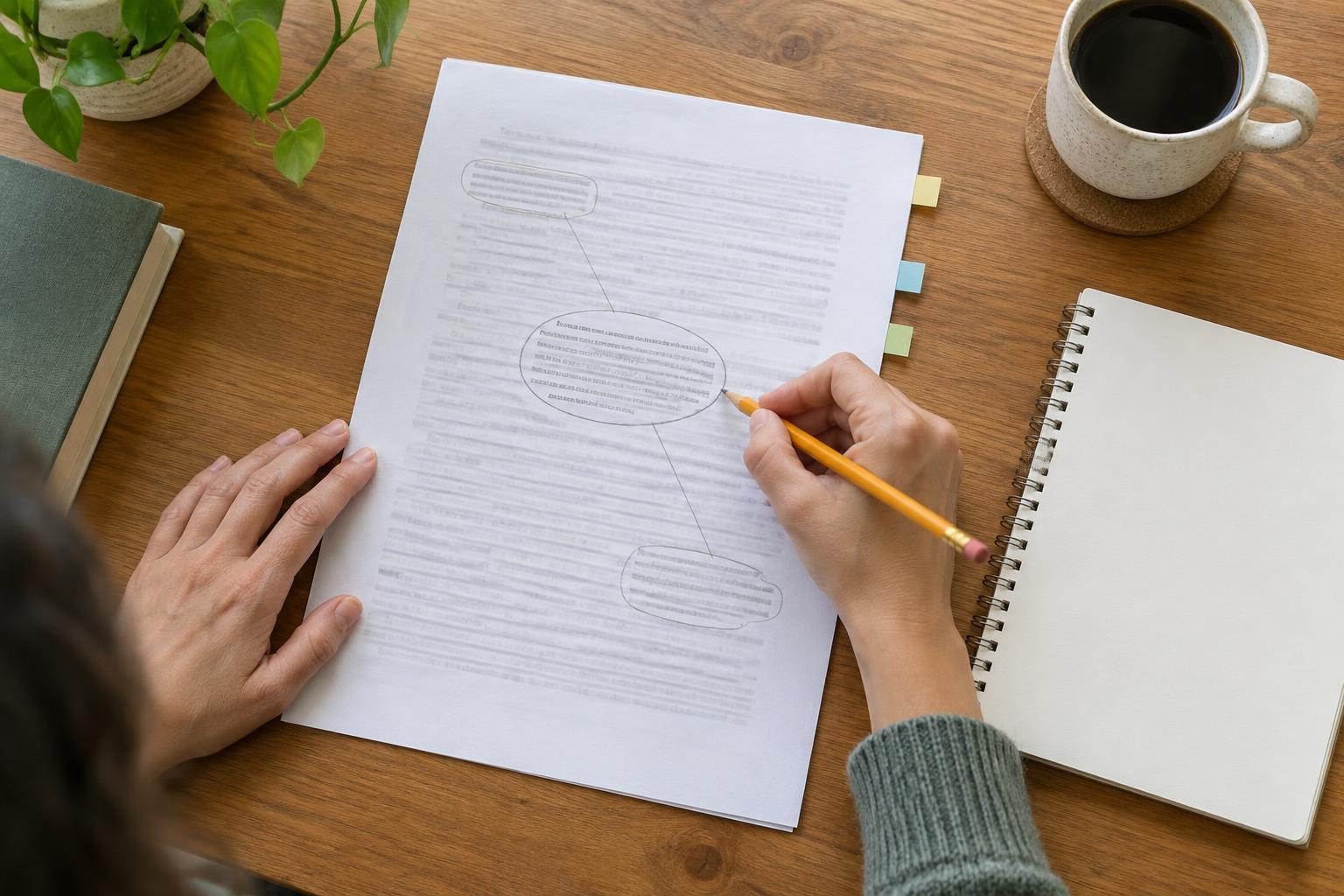
Close reading is useful when you need to understand a difficult explanation, follow a chain of reasoning, compare claims, or apply an idea accurately. Read in small stretches and notice how each sentence relates to the next. Mark unfamiliar terms, restate a key point in your own words, and ask what examples or reasons the writer gives. A pause to explain one paragraph can be more valuable than pushing through several pages without understanding them.
You do not need to annotate every line. Choose passages that carry the main argument or answer your study question. If a sentence remains unclear, reread the paragraph around it rather than the sentence alone. Then try to state both the claim and its support: “The writer argues this because…” If you cannot complete that thought, identify what is missing before moving on.
Close reading also means noticing limits. Is a statement presented as a general rule, a possibility, or a specific example? Does a conclusion depend on a condition stated earlier? These distinctions are easy to miss when reading quickly, especially when the topic is new to you.
Use a three-pass routine for study
When you have a longer reading assignment, begin by skimming to identify its parts and form a few questions. Next, scan for terms or sections directly relevant to your goal. Finally, read those sections closely, returning to other parts if they provide needed context. This order is flexible: a surprising sentence found while scanning might send you back to the introduction, while a difficult passage might prompt another skim of the headings.
Finish by closing the text and writing a brief account of what you learned, what you still need to check, and where in the text you would look next. That final step reveals whether your chosen approach did its job. If you can locate a fact but cannot explain it, read more closely. If you understand one paragraph but cannot see its place in the whole, skim again. Good reading is not about staying in one mode; it is about changing modes with a purpose.