What shadowing is—and what it is not
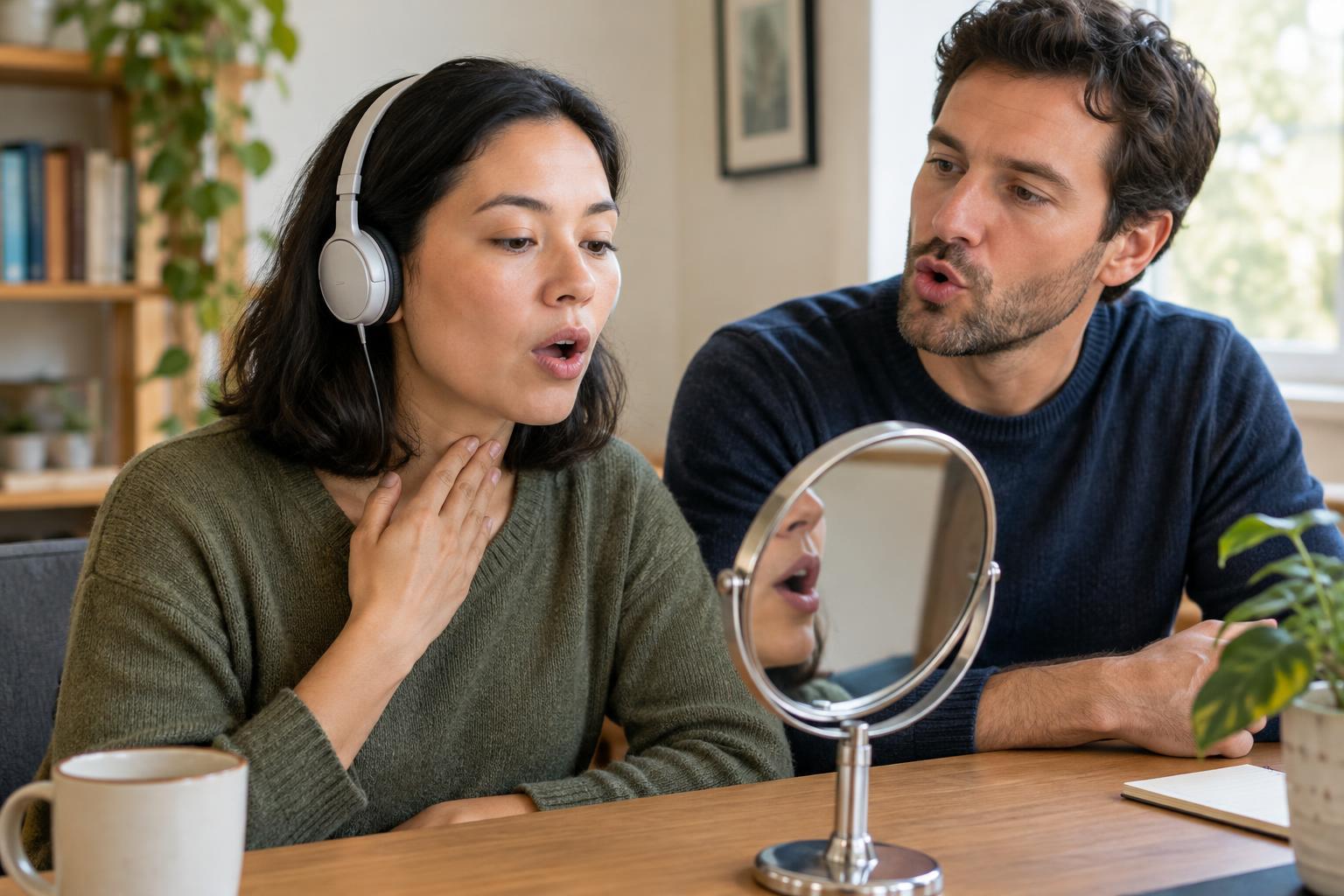
Shadowing means listening to speech and repeating it while the recording continues, usually just a moment behind the speaker. Instead of waiting for a sentence to finish, you try to follow its sounds, pauses, and rhythm as they happen. The exercise gives you a model for how words connect in continuous speech, which can feel quite different from saying them one at a time.
The goal is not to copy a speaker perfectly or erase your accent. A more useful goal is to become easier to understand and more comfortable producing the patterns of a language. Shadowing can help you notice features you might miss while reading, such as which words receive emphasis or how a speaker’s voice rises and falls. It works best alongside other practice, including conversation and feedback when those are available.
Choose a clip you can work with
Start with a recording of roughly 20 to 60 seconds. Choose one with clear speech, limited background noise, and a topic you can mostly understand. A single speaker is often easier to follow at first. If a transcript is available, keep it nearby, but treat it as a check on what you hear rather than the main focus of the exercise.
A clip that is too difficult can turn shadowing into a scramble to catch words. If you cannot follow the general meaning after a few listens, choose something simpler or work with a smaller portion. Ordinary dialogue, a short explanation, or a familiar story can all work. Pick a speaking style relevant to your aims: a learner preparing for everyday conversation may find a natural exchange more useful than a formal speech.
Use a short, repeatable practice routine
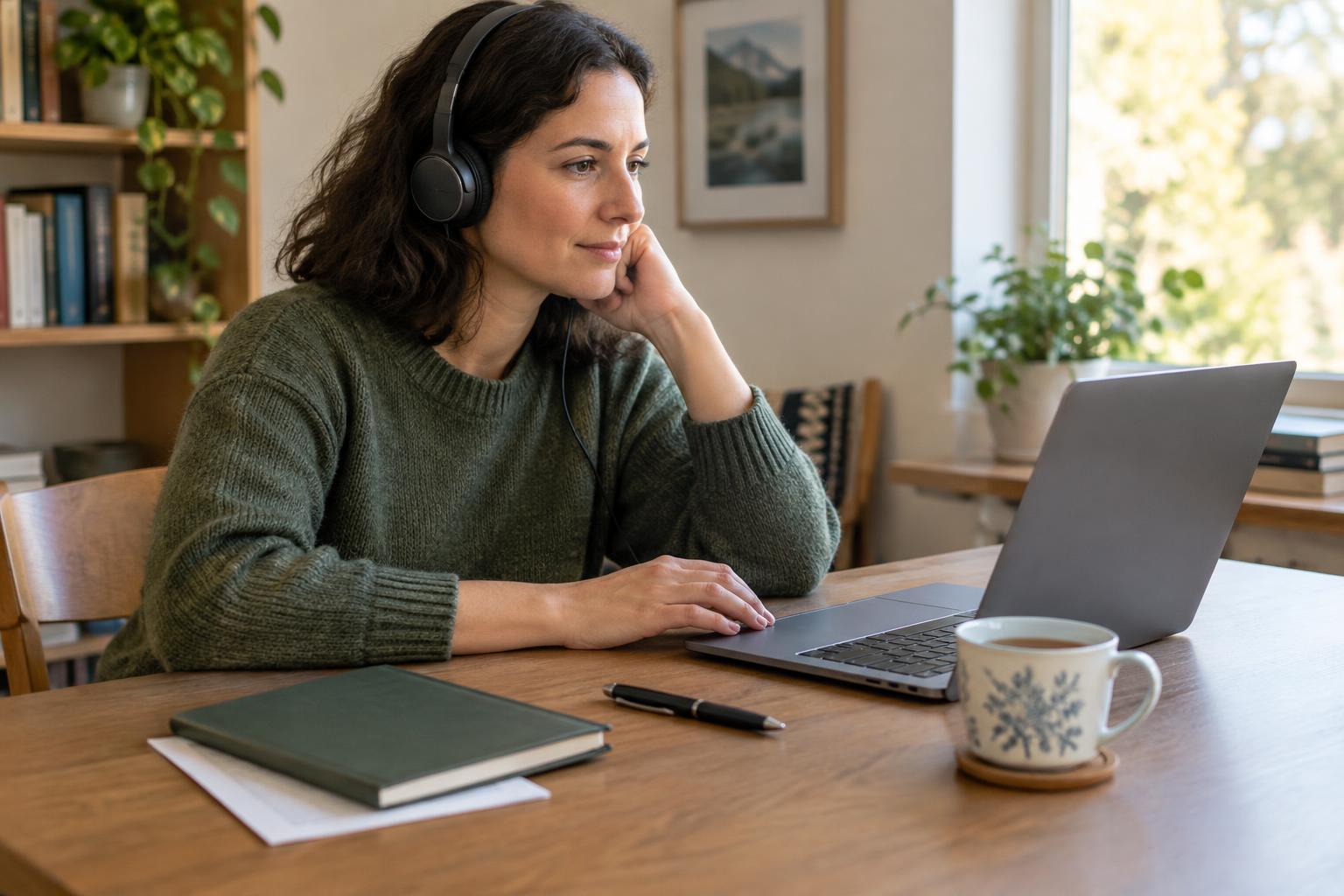
First, listen to the whole clip without speaking. Try to identify its main idea and where the speaker pauses. Next, play a short portion and repeat it after the speaker, stopping the audio if needed. This gives your mouth time to try unfamiliar sound sequences. Check any essential words you do not recognize so that you are not practicing a string of sounds with no meaning.
Then play the portion again and speak along, staying a fraction of a second behind. Keep going even if you miss a word; rejoin at the next phrase rather than stopping every time. On another pass, pay attention to just one feature, such as stressed words, connected sounds, or pauses. Finally, listen once more without speaking. A brief session with a clear focus is often more manageable than repeatedly playing a long recording.
Handle difficult moments without chasing perfection
It is normal to lose your place when a speaker speeds up or links words together. Reduce the size of the passage before trying to change everything about your speech. You might practice one sentence at a time, or begin by quietly marking its rhythm with your voice before attempting every word. If your player has a slower-speed setting that keeps the speech reasonably clear, use it as a temporary aid and return to normal speed when you can.
Notice patterns rather than treating each missed word as a separate mistake. Perhaps the beginning of phrases is easy but the ends disappear, or perhaps you stress every word equally. Choose one pattern to work on for a few repetitions. You can record yourself and compare your version with the original, listening for a specific difference. The comparison is a tool for noticing, not a test you must pass.
Make progress visible in everyday speech
Revisit the same clip over several sessions before switching to a new one. Familiarity frees up attention for details such as timing and intonation. Keep a simple note of what you practiced and one thing you noticed: for example, “I paused too late” or “the question rises at the end.” These observations give the next session a purpose without requiring a complicated tracking system.
Shadowing is most useful when you carry something from the recording into speech of your own. After practicing, put the transcript away and explain the clip’s idea in your own words, or use one of its phrases in a new sentence. You may not sound like the recording, and you do not need to. The practical payoff is greater awareness of how speech sounds and more options for making yourself understood.