Choose a text you can work with
The first text you read in a new language should be short enough to finish in one sitting. A menu, a brief message, a simple recipe, or a few lines of a story can give you a complete reading experience without demanding a whole afternoon. Choose something with a clear purpose or familiar subject. If you already know roughly what a recipe or event notice is likely to say, you have clues to help you make sense of unfamiliar words.
Look for a text that stretches you without making every line a puzzle. You do not need to understand most of it at first glance, but you should be able to spot a few words, names, numbers, or familiar sentence patterns. If a passage feels impenetrable, choosing an easier one is not a setback. It gives you room to practise reading rather than spending all your energy decoding.
Make a first pass without stopping
Before opening a dictionary, read the whole text once. Ask a broad question: What is this about? Notice the title, layout, punctuation, and any repeated words. For a message, you might identify who is writing and what they want. For a recipe, you might look for ingredients and actions. Your aim is a rough picture, not an exact translation.
Mark confusing parts lightly and keep moving. Stopping at every unknown word can break the thread of meaning, especially when you are still learning how sentences fit together. At the end of your first pass, say or write a one-sentence guess about the text in your own language. It is fine to include uncertainty: “I think this is an invitation, but I am not sure when the event happens.” That guess gives your next reading a purpose.
Use clues, then look up selectively
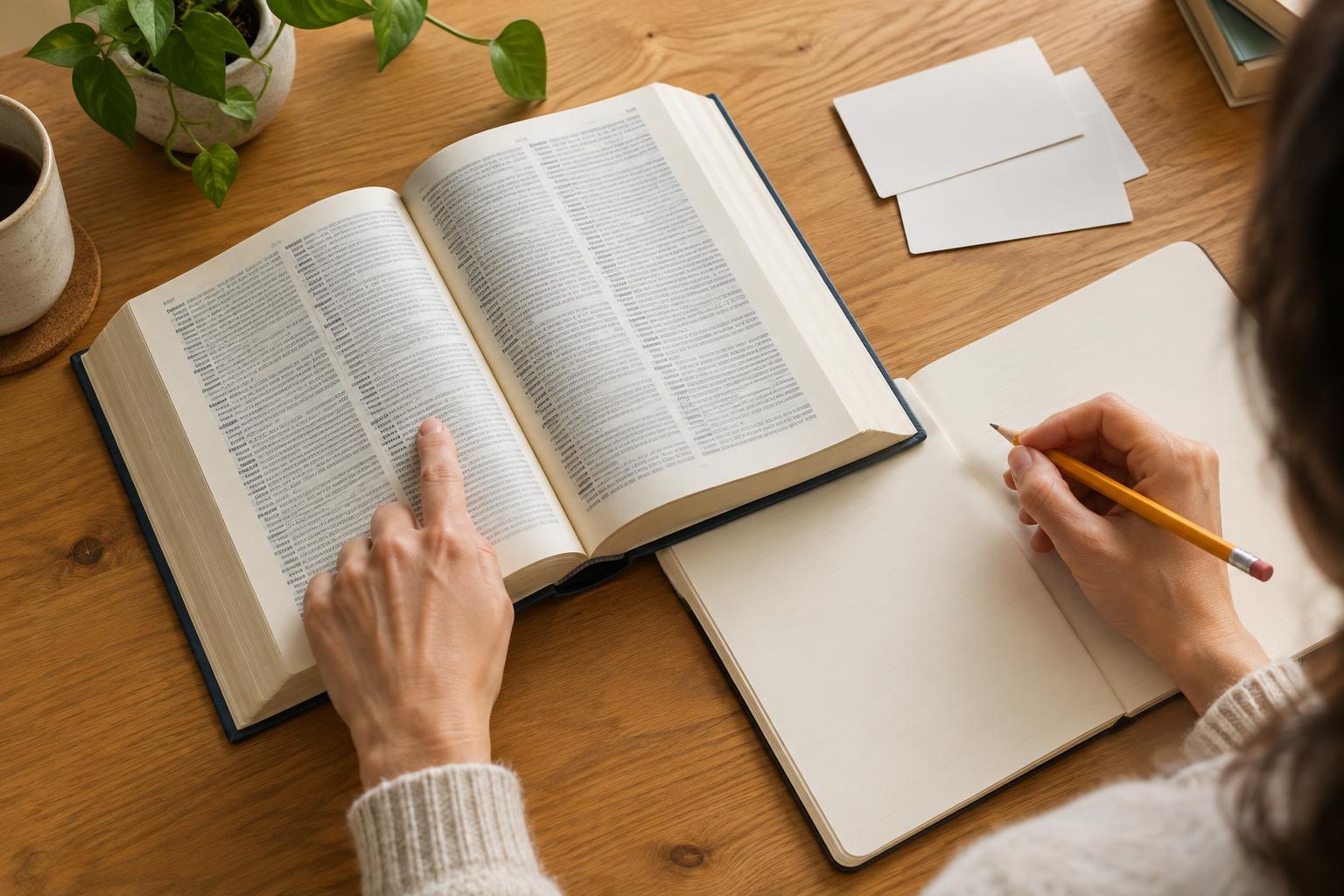
On a second pass, inspect the words that seem important to your main question. A repeated word, a verb that changes what happens, or a term needed to follow an instruction may be worth looking up. A descriptive word that does not affect the overall meaning can often wait. Try a guess from context first, then check it. Comparing your guess with a dictionary entry helps you notice which clues were useful.
Dictionary entries may offer several meanings, so use the surrounding sentence to choose among them. Pay attention to a word’s role: is it naming a thing, describing one, or showing an action? If you cannot tell, leave a question mark rather than forcing an answer. Keep a short list of useful expressions, not a record of every unfamiliar item. A phrase such as “at the station” may be more helpful to remember than an isolated word because it shows how the word is used.
Notice patterns without solving every rule
A short text can introduce a lot of grammar at once. Instead of trying to explain every ending or word order choice, look for one pattern you can recognize again. Perhaps the same opening appears in two requests, or a verb changes when the writer talks about yesterday. Underline the examples and describe what you notice in ordinary language. You can check a lesson or reference later if the pattern keeps appearing.
When you finish, make one small response to the text. Write a reply to the message, list the steps in the recipe, or describe the story’s main action in two simple sentences. Use words and structures you already know; the response is not a test of perfect accuracy. It is a way to check whether you understood enough to do something with what you read.
Return to the same text once more
Reading a text again after a break can be more rewarding than immediately starting a harder one. First, try rereading without your notes. Then check whether the words you looked up still make sense in context. You may find that a sentence that seemed slow and crowded now reads as a single idea. If it does not, you have a specific place to revisit.
To keep the habit manageable, save a few short texts that interest you and rotate between new reading and rereading. You might spend one session discovering the basic meaning and another noticing useful phrases. Progress is not measured only by how many new pages you finish. Being able to understand more, guess more carefully, and tolerate a little uncertainty are valuable reading skills in any language.