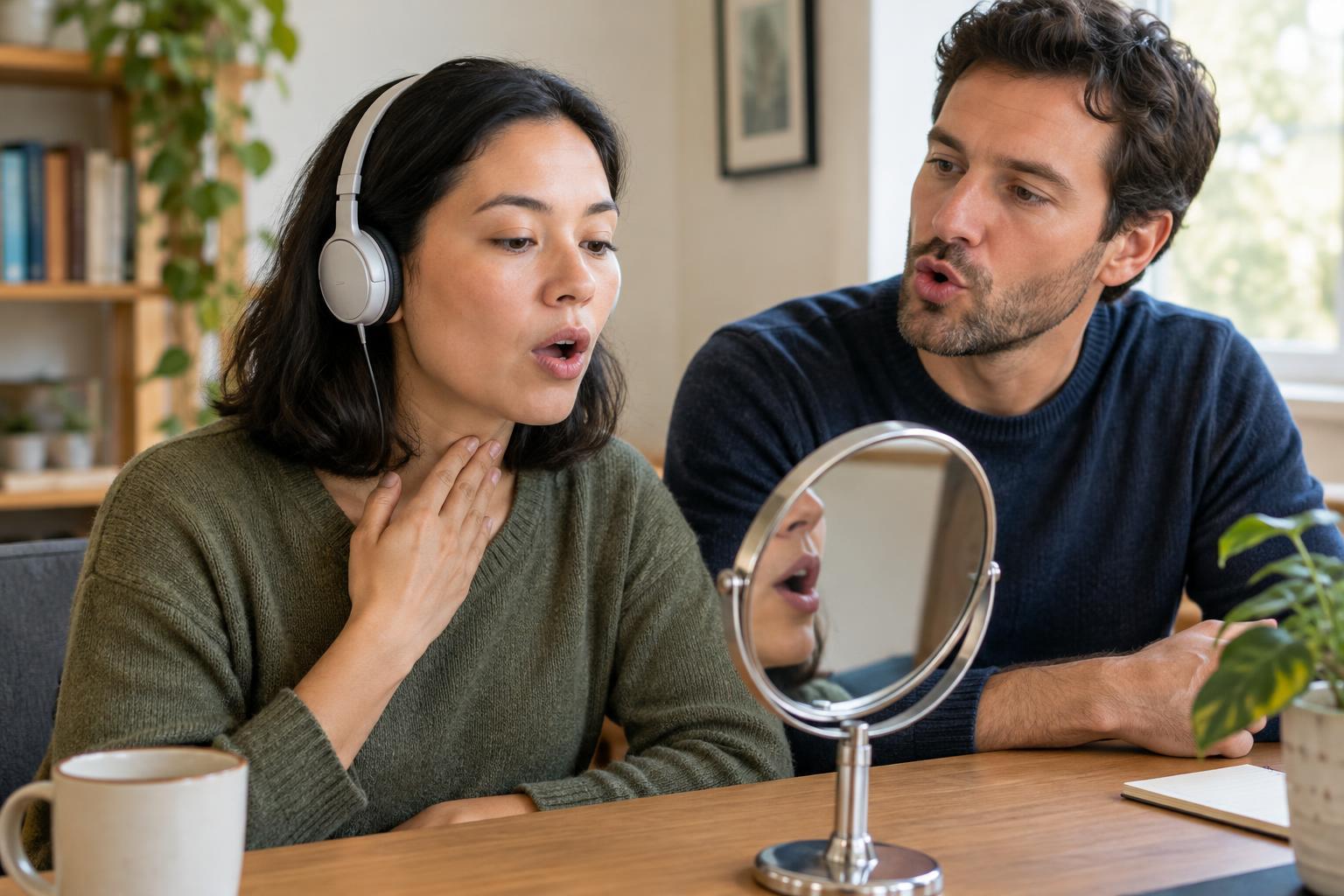
Start with a small listening goal
A full conversation can feel like a blur when you are new to a language. Words run together, speakers change pace, and you may still be working out one sentence while the next one begins. Start with a clip short enough to replay without frustration. A brief exchange, a simple announcement, or a few lines from a learner-friendly recording can give you plenty to work on.
Choose one goal for each session. You might listen for the topic, identify who is speaking, or catch a familiar phrase. You do not need to understand every word for the session to be useful. If a clip is so difficult that you cannot even guess its setting after several listens, set it aside and try something simpler. Material you can partly understand gives you a better starting point for noticing what is new.
Listen in passes, not all at once
On the first play, keep your attention on the general meaning. Ask yourself: What is happening? Is the speaker asking, explaining, or responding? Resist the urge to stop at every unknown word. Listening from beginning to end helps you hear the shape of the message rather than treating it as a string of separate vocabulary items.
On the second play, choose a narrower task. Listen for a name, a place, a reason, or the words around a phrase you nearly recognized. Pause and replay a short stretch if needed. Afterward, write down what you think you heard, including uncertain guesses. Compare those guesses with another listen. This gives you something specific to check and keeps the exercise from becoming passive repetition.
Use transcripts as a check, not a shortcut
A transcript can help explain why a familiar word was hard to hear. It may have been spoken quickly, linked to the next word, or pronounced differently from the version you practiced in isolation. Try listening once or twice before reading. Then check the text and mark a few places where your ears and the written words did not match. Listen again while following those lines, and finally try once without looking.
Keep your review selective. Choose one useful expression or one sound pattern rather than copying every unfamiliar word. Say a short line aloud after the speaker if you want to practice its rhythm. The aim is not to imitate a whole recording perfectly; it is to make a few parts easier to recognize the next time they appear.
Build a bridge to longer conversations
Once a short clip feels manageable, increase the challenge in small steps. Try a longer exchange on a familiar subject before moving to a discussion with several speakers or an unfamiliar topic. You can also listen to a short section of a longer conversation, take a break, and continue with the next section. This preserves the flow without demanding that you follow everything at once.
In conversations, pay attention to clues beyond individual words. A question often signals what the next speaker will address. Repeated words can point to the main topic, while a change in tone may signal agreement, surprise, or a new idea. When you lose the thread, return to a simple question: What are the speakers talking about now? Rejoining the conversation matters more than recovering every missed detail.
Make practice repeatable
A workable routine might include one new clip, a couple of focused replays, and a quick note about what you understood. On another day, return to an older clip before trying something new. You may notice more words without needing to study them separately. Keep notes brief: the clip’s topic, one phrase worth remembering, and one question you still have are enough.
Vary the difficulty when you need to. An easier clip can help you practice listening smoothly; a harder one can expose you to new speech patterns. Neither has to be a test. As you progress toward full conversations, measure success by the tasks you can do—following the topic, recognizing a response, or summarizing the main point—rather than by whether you caught every word.