Start with a sentence you can use
A grammar rule can tell you how a sentence is built, but an example shows you what that structure does. Instead of trying to memorize an explanation on its own, begin with a short sentence you can imagine saying or writing. “I’ve already eaten” is more useful to many learners than a long list of tense labels because it connects a form to a familiar situation.
Choose examples that are understandable apart from the one feature you want to study. If every word is new, it is hard to tell which part of the sentence carries the pattern. A course, a story at your level, or a correction to something you wrote can all provide starting points. Keep the full sentence, not just the grammatical fragment, so you remember its meaning and context.
Notice what stays the same and what changes
Put two or three related sentences side by side. For example: “I’m going to cook tonight,” “She’s going to call tomorrow,” and “We’re going to leave soon.” You can notice a shared shape while also seeing how the subject and verb form change. Try describing the pattern in your own words before looking up a rule: someone is planning an action, and the time may be named at the end.
Examples are clues, not proof that you have found every possible use of a form. A pattern that works in your small set may change with a different meaning or context. If an example puzzles you, mark it with a question rather than forcing it into a rule. A brief grammar explanation can then help you check what you noticed.
Turn one model into several sentences
Once you understand a model sentence, change one element at a time. Start with “I usually read on the train.” Replace the activity: “I usually listen to music on the train.” Then change the place: “I usually read at home.” Finally, change the subject and adjust the verb if needed: “My brother usually reads at home.” Small changes make it easier to see which parts are flexible and which parts need agreement.
Make the new sentences true, or at least plausible, for your life. A sentence about your routine, plans, or opinions is easier to retrieve when you want to communicate. Say it aloud, write it, and then try using it in a short exchange or paragraph. If you cannot make a variation without guessing, return to a clear model or check the form before repeating a possible mistake.
Keep a small pattern notebook
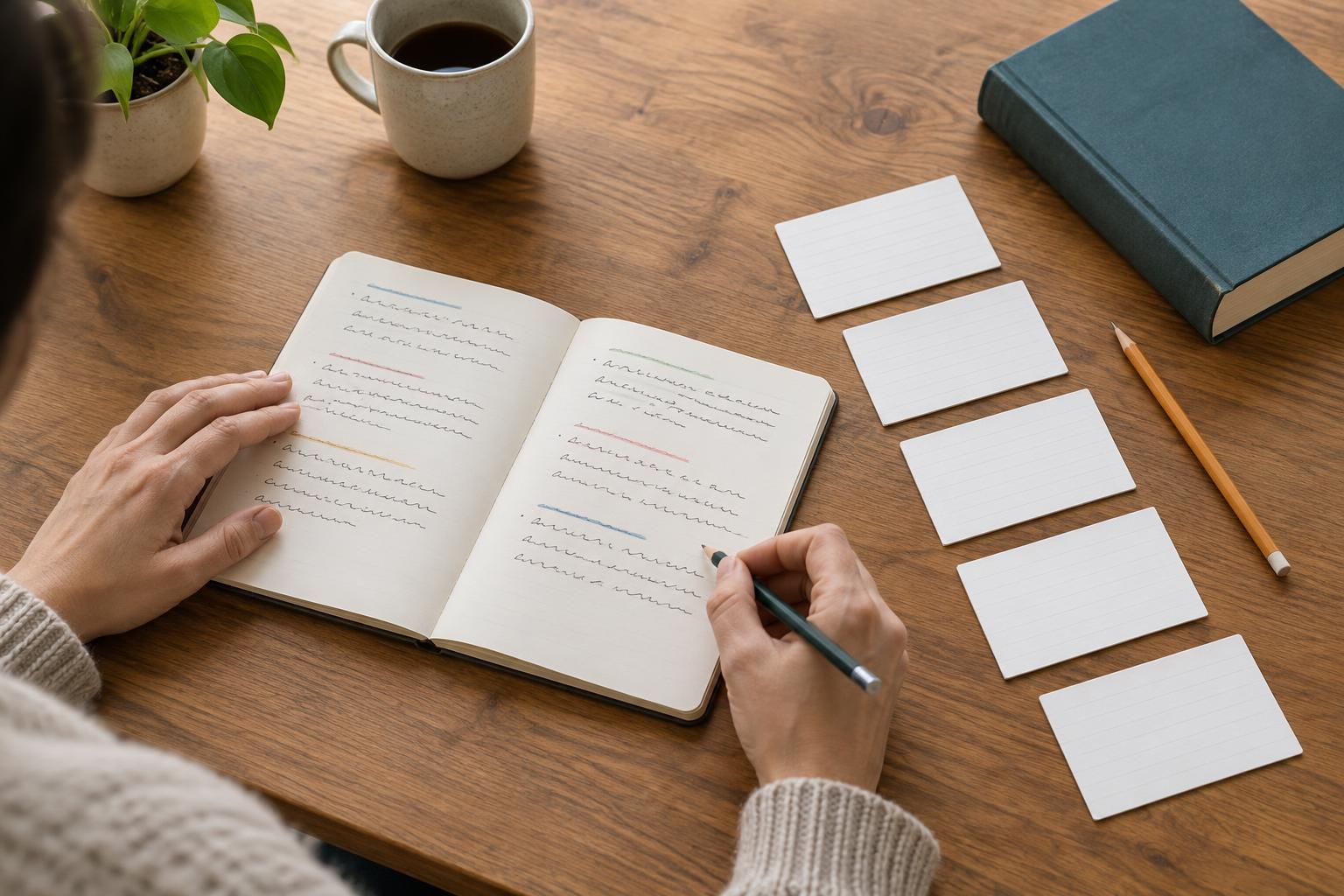
A useful note does not need to contain an entire grammar lesson. Give each pattern a short label, one reliable model sentence, a plain-language note about its meaning, and two variations of your own. For example, a note might distinguish “used to” for a past habit from a sentence about a current habit. Add a question if you are unsure when the pattern sounds natural.
Organize notes by what you want to express, such as habits, requests, comparisons, or plans. This makes them easier to consult when you write or speak. If you discover a better example later, replace the old one. The notebook is a working collection of sentences you can use, not a record you must preserve unchanged.
Review by recalling, not just rereading
To review a pattern, cover the example and try to produce a sentence that fits a prompt: describe a past routine, make a polite request, or compare two choices. Then uncover your model and check the word order and verb form. Revisiting a few patterns across separate sessions gives you more chances to retrieve them than reading the same page repeatedly in one sitting.
After practicing a pattern in isolation, look for it in a longer passage or conversation. Ask what the speaker or writer is trying to convey and whether a different form might change the meaning. When you notice a sentence you would like to use, save it as another model. Over time, grammar becomes less like a collection of rules to recite and more like a set of choices you can recognize and make.