Start with a map, not a full understanding
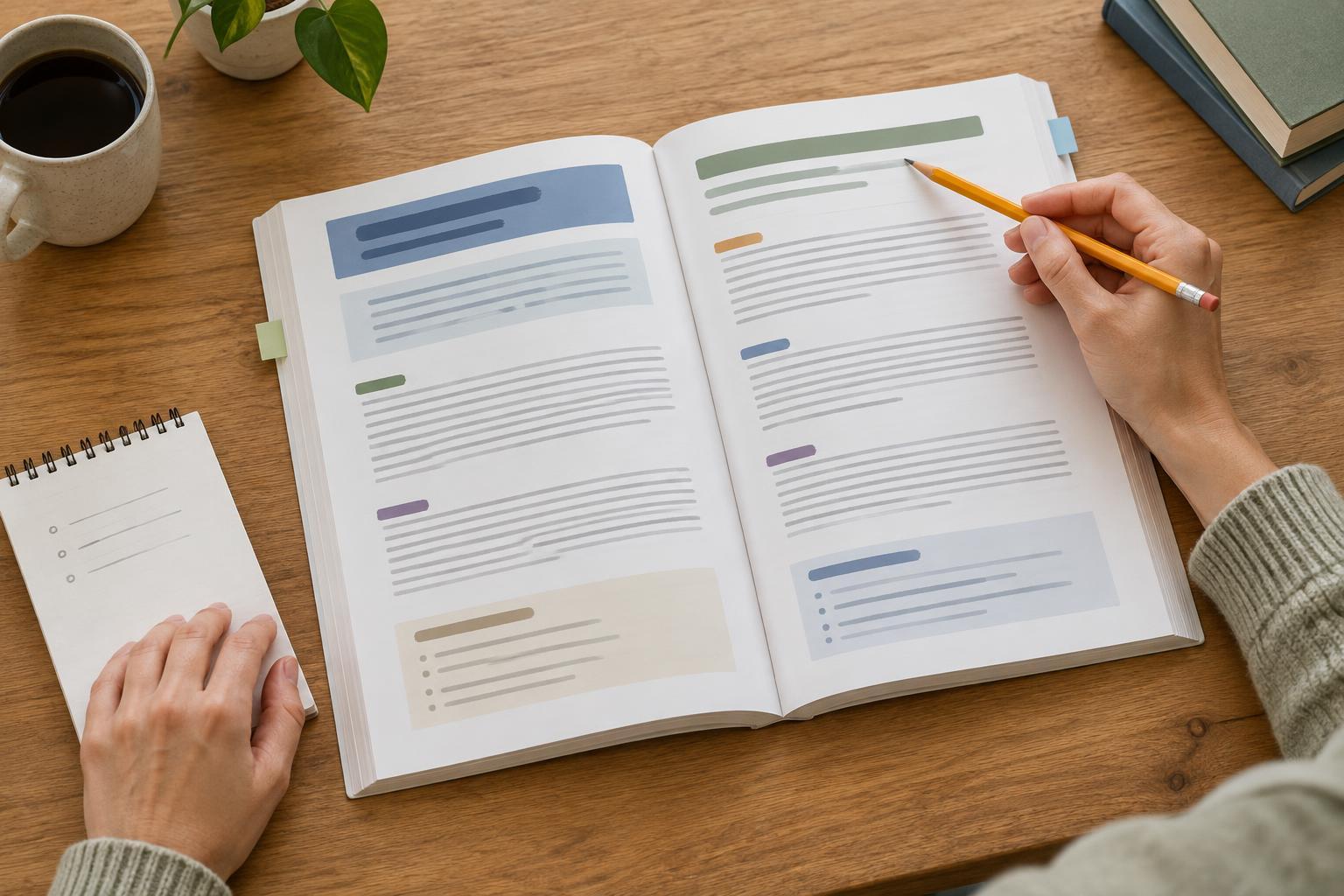
Dense nonfiction can feel difficult because each paragraph may introduce a claim, qualify it and refer back to an earlier idea. Trying to understand every detail on the first pass can leave you rereading the same lines without making progress. Instead, begin with a quick look at the title, headings and paragraph breaks. Ask what question the passage appears to address. You are making a rough map, not committing to an interpretation.
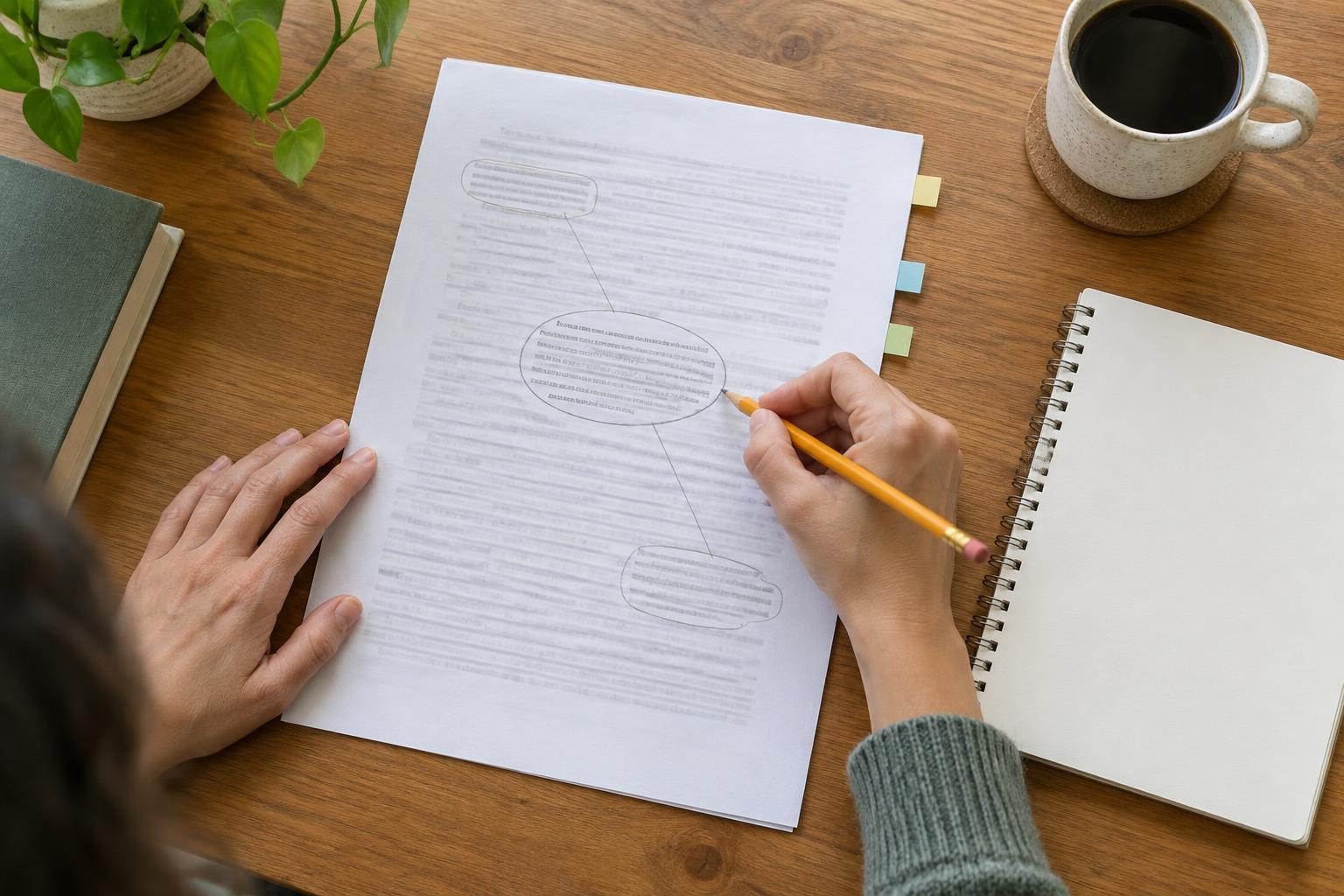
Choose a short stopping point, such as two or three paragraphs. Keep a sheet of paper or a note open beside the text. On your first read, mark only terms you cannot follow without clarification and sentences that seem central to the author’s argument. If you mark nearly everything, the marks will not help you decide where to return.
Give each paragraph a job description
After reading one paragraph, look away from the text and finish this sentence in your own words: “This paragraph is doing ___.” It might be defining a term, making a claim, offering an example, presenting evidence, acknowledging an exception or explaining a consequence. A job description is often easier to write than a perfect summary, and it helps you see why the paragraph belongs in the passage.
Then write a one-sentence gist. Imagine a paragraph that describes how shade from city trees can affect a pedestrian’s experience of heat but notes that the effect depends on where the trees are planted. A useful gist might be, “Tree placement matters as well as the number of trees.” That sentence leaves out details, but it preserves the paragraph’s central distinction. If you cannot write a gist yet, note the specific obstacle: an unfamiliar word, a complicated sentence or an unclear connection to the previous paragraph.
Untangle only what blocks the meaning
For a long sentence, first find its basic action: who or what is doing something, and what is being said about it? Temporarily set aside phrases in commas or parentheses. Then add those phrases back and ask whether they give an example, a condition or a qualification. Signal words deserve attention. “However” may reverse the direction of a point, while “because” usually introduces a reason. These small words can matter more than a technical term you can define later.
Do not stop at every unfamiliar word. See whether the surrounding sentences let you follow the argument without it. If the word is essential, write a tentative meaning from context and check it with a reference when you can. Replace it in the sentence with plain language and see whether the paragraph still makes sense. This keeps a vocabulary search from becoming a detour away from the passage.
Connect paragraphs before moving on
Once you have read two paragraphs, ask how the second relates to the first. Does it support the earlier point, narrow it, challenge it or shift to a new question? Write a short connector between your gist sentences, such as “adds an example” or “introduces a limitation.” This step turns a stack of separate notes into an outline of the author’s reasoning.
When a connection is unclear, reread the end of the first paragraph and the start of the next one together. Look for repeated terms or references such as “this approach” and identify what they point to. If you still cannot tell, put a question mark beside the connection and continue to your stopping point. A later paragraph may clarify it. Not every uncertainty needs to be solved immediately.
Close the text and test your understanding
At your stopping point, cover the passage and use your notes to explain its main point aloud or in a few sentences. Include the question it addresses, the answer it seems to offer and one important qualification. Then reopen the text and check whether your explanation overstates the claim or misses a contrast. Correcting a small summary is often more productive than reading the whole passage again without a purpose.
For a longer reading, repeat the routine in short batches. Keep your paragraph gists brief enough to scan, and finish with two lists: what you understand and what you need to revisit. You may not resolve every difficult detail in one sitting. The goal is to move from a wall of text to a sequence of ideas you can inspect, question and explain.