Choose one outcome before you begin
A vague plan such as “study for a while” makes it easy to drift between tasks. Before you sit down, decide what you want to be able to do by the end of the session. You might explain a chapter’s main idea in your own words, solve five practice problems, or review a short list of unfamiliar terms. Keep the outcome small enough to attempt in the time you have. A clear finish line helps you decide which activities belong in the session and which can wait.
Write the outcome where you can see it, along with the first action you will take. “Open my notes and answer the first review question” is easier to start than “work on the course.” If the material is new, allow time to find out what you do not understand. Your outcome can be a short list of questions to investigate rather than complete mastery of the topic.
Prepare your space and materials
Gather what you need before starting: the relevant book or file, a place to write, and any reference material required for the task. Put unrelated items out of sight if they tend to draw your attention. You do not need a perfect desk or a silent room. Aim for a setup that lets you begin without repeatedly searching for supplies, adjusting your seat, or deciding what to use next.
Make the environment fit the work. For reading, choose a place where you can see the text comfortably and make notes. For speaking practice, choose a place where you can talk without worrying about disturbing someone. If you share a space, a brief message that you are studying for a set period may reduce avoidable interruptions. When you cannot control noise or activity around you, consider a shorter task you can complete despite it, rather than waiting for ideal conditions.
Give distractions a place to go
A phone or open browser can turn a quick check into a change of task. If you do not need your phone, move it beyond easy reach and silence nonessential notifications. If you are studying online, close unrelated tabs and keep only the pages needed for your current step. When an online reference leads to another interesting question, note the question instead of following it immediately.
Keep a small “later” list beside you for thoughts that interrupt your work: a message to send, a household task, or a topic to explore. Writing them down gives you a way to return to them without acting on each one now. Some interruptions will still need attention. When that happens, leave yourself a brief restart note, such as “resume at question three and check the example,” so returning requires less effort.
Work in a manageable block
Choose a study block that suits your energy and the task. A demanding problem may call for a shorter block than familiar review. Set a stopping point, either by time or by a small piece of work, and give yourself permission to pause there. A break is most useful when it feels like a break: stand up, stretch, get water, or look away from the screen before deciding whether to continue.
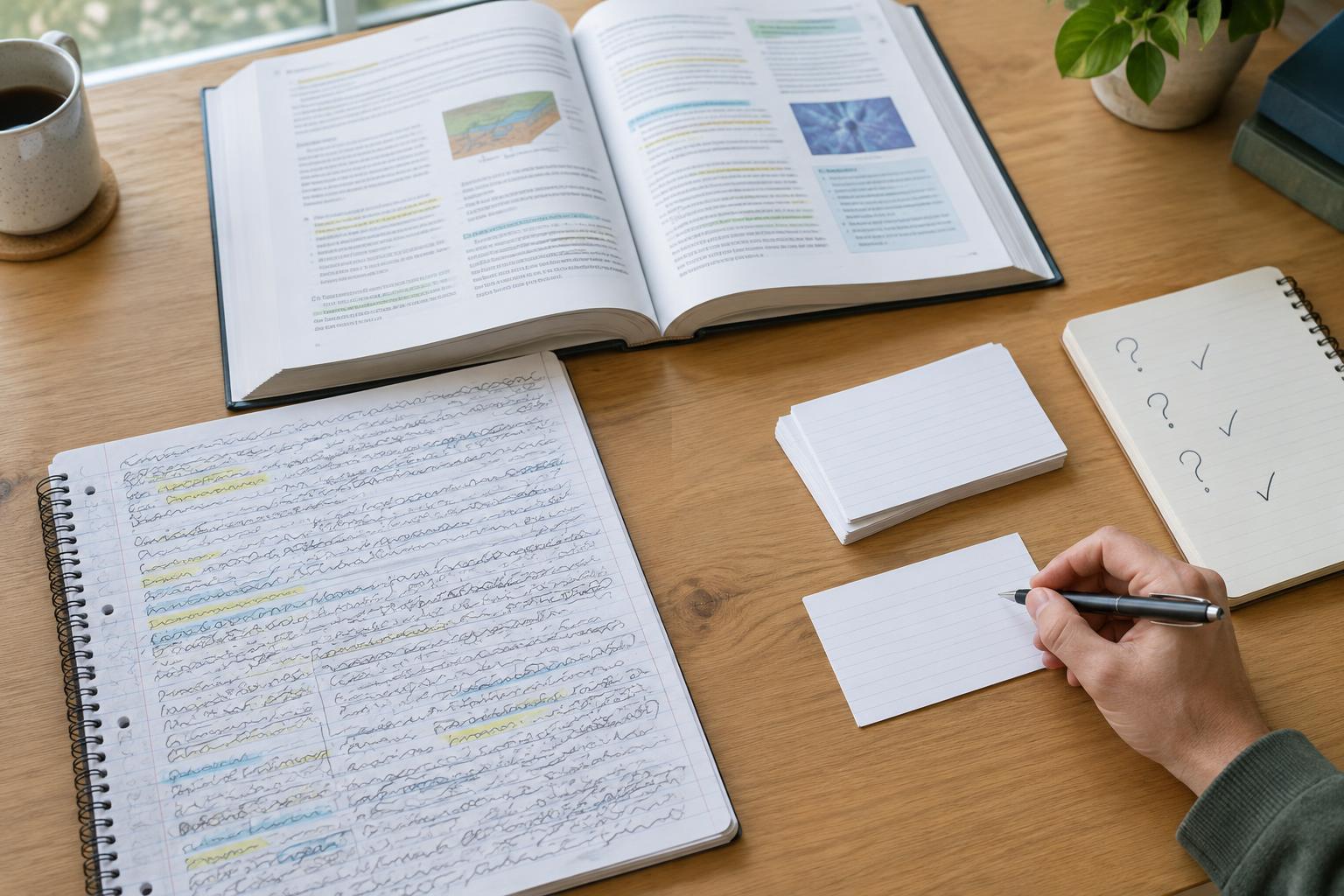
During the block, do something with the material rather than only passing your eyes over it. After a few pages, close the text and write down the main point from memory. For a worked example, try the next problem without looking at the solution first. If you get stuck, identify the exact step you cannot complete. These actions give your attention a job and make it easier to notice what needs another look.
End with a quick reset for next time
Leave a few minutes to check the outcome you chose at the start. What can you explain or do now? What remains unclear? You do not have to complete every planned item for the session to be useful. If you were interrupted or the task took longer than expected, record where you stopped instead of trying to make up the time in a rush.
Finish by writing one concrete next step, such as “review the two terms I confused” or “start with practice problem six.” Then put your materials where you can find them. A focused session is not one without stray thoughts or unexpected interruptions. It is one in which you know what you are working on, have a way to return when attention slips, and can pick up the thread later.