Start with the reason you picked up the book
A nonfiction book can serve many purposes. You might want to solve a specific problem, understand an unfamiliar subject, compare viewpoints, or simply follow your curiosity. Before you open the book, finish this sentence: “I am reading this because I want to…” Keep the answer in your own words. “Understand why I struggle to finish personal projects” is more useful than “Learn about productivity” because it gives you something recognizable to look for.
Your purpose does not need to sound academic or important. Reading to enjoy an author’s way of explaining a subject is a valid aim. So is reading to decide whether a topic deserves more of your time. The point is to name what would make this particular book worthwhile for you, rather than assuming you must absorb every detail.
Turn your purpose into a guiding question
A question gives your attention a direction without requiring you to know the answer in advance. If you are reading a book about gardening because you want to care for a few containers, you might ask, “Which decisions matter most when choosing plants for a small, sunny space?” For a history book, your question might be, “How does the author explain why this event happened?” Write one main question where you can see it when you begin reading.
Choose a question that fits the book’s likely scope. “What should I do with my entire life?” may be too broad for one book to answer. “What ideas here could help me choose my next learning project?” is easier to work with. If you are exploring a subject rather than seeking a solution, try “What are the main ideas I want to be able to explain to someone else?”
Decide how closely you need to read
Your purpose can guide your reading depth. To get acquainted with a topic, you may only need a broad understanding of the central ideas and how the chapters connect. To learn a process you plan to try, you may need to slow down around examples, steps, and limitations. To evaluate an argument, you will want to notice the author’s claims, supporting reasons, and possible gaps.
Make a provisional choice before you begin: browse for orientation, read steadily for understanding, or study selected parts closely. You are not promising to read at one speed throughout. This choice simply prevents a common mismatch, such as taking detailed notes on every page when you only wanted an overview. It also gives you permission to spend more time on a chapter that speaks directly to your question.
Plan what you will capture and what you can leave behind
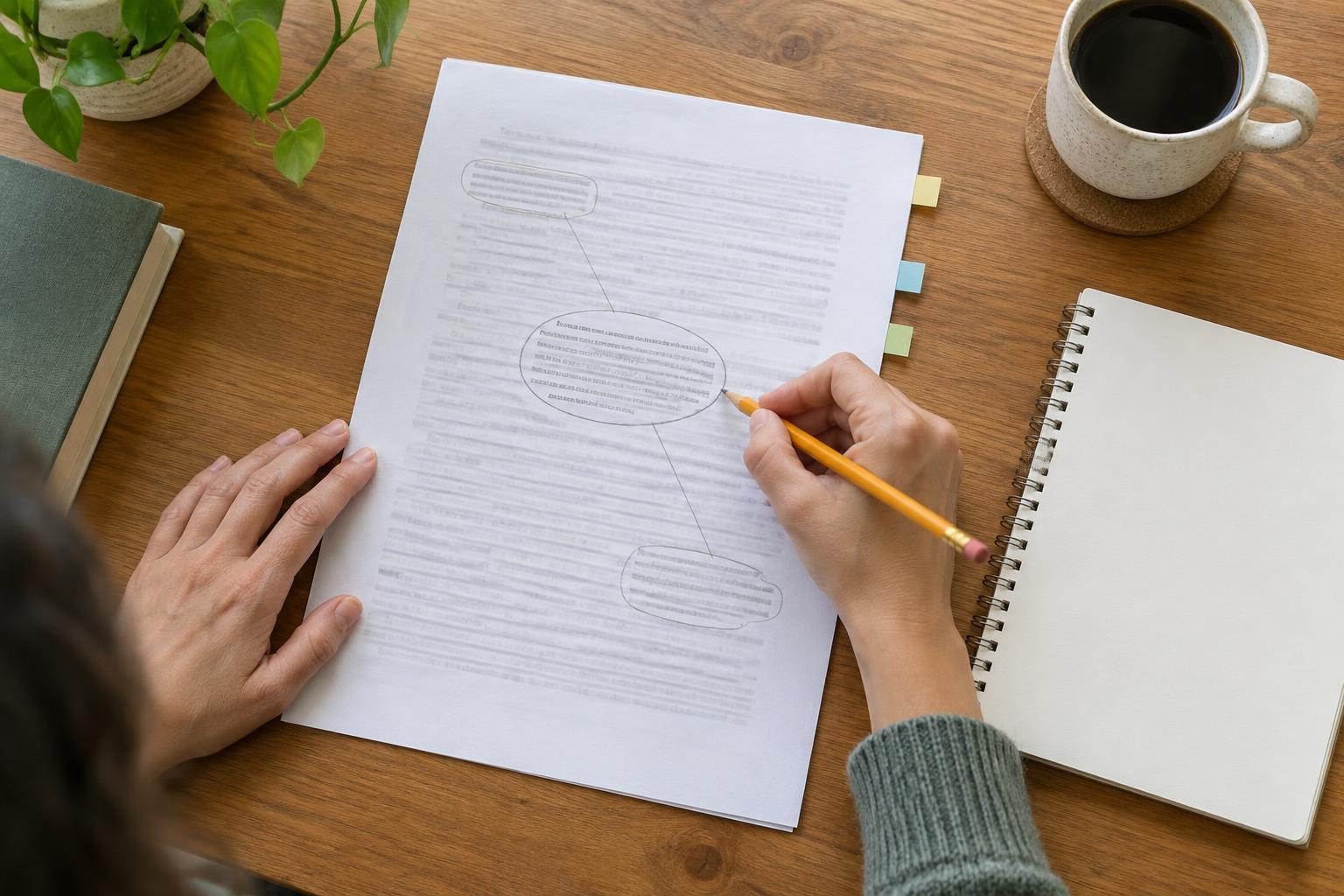
Decide in advance what kind of note would help you use the book later. For a practical book, that might be a short list of ideas to try. For an explanatory book, it might be a few sentences describing the central argument and the questions you still have. Keep the format small enough that you will actually use it. You could place your guiding question at the top of a page and add brief notes only when something helps answer it, challenges your assumptions, or deserves a second look.
A reading purpose also helps you decide what not to record. An interesting example does not always need to become a note. You can appreciate a passage without preserving it, and you can move past a section that does not serve your current aim. If you may need to find an idea again, a short note with a page reference is often more useful than copying a long passage without explaining why it matters.
Treat the purpose as a starting point, not a rule
Once you begin, the book may turn out to be different from what you expected. A chapter may reveal a better question, or you may discover that the book is more useful as an introduction than as a practical guide. Pause after a chapter or two and ask, “Is my original purpose still helping me read?” If not, revise it. Changing direction is part of attentive reading, not a failure to follow a plan.
Before you open your next nonfiction book, take two minutes to write three lines: why you chose it, the question you want it to help you explore, and what you hope to take away. That small plan gives you a way to begin. As you read, let the book complicate your question—and let your purpose help you recognize when you have found something worth keeping.