Why retelling is worth trying
You can understand a story in a new language yet struggle to explain what happened. Retelling helps you cross that gap. Instead of repeating the original sentences, you choose the important events and express them with words you can use. The task has a clear subject, so you do not have to invent a conversation from nothing, but it still leaves room to practice making your own sentences.
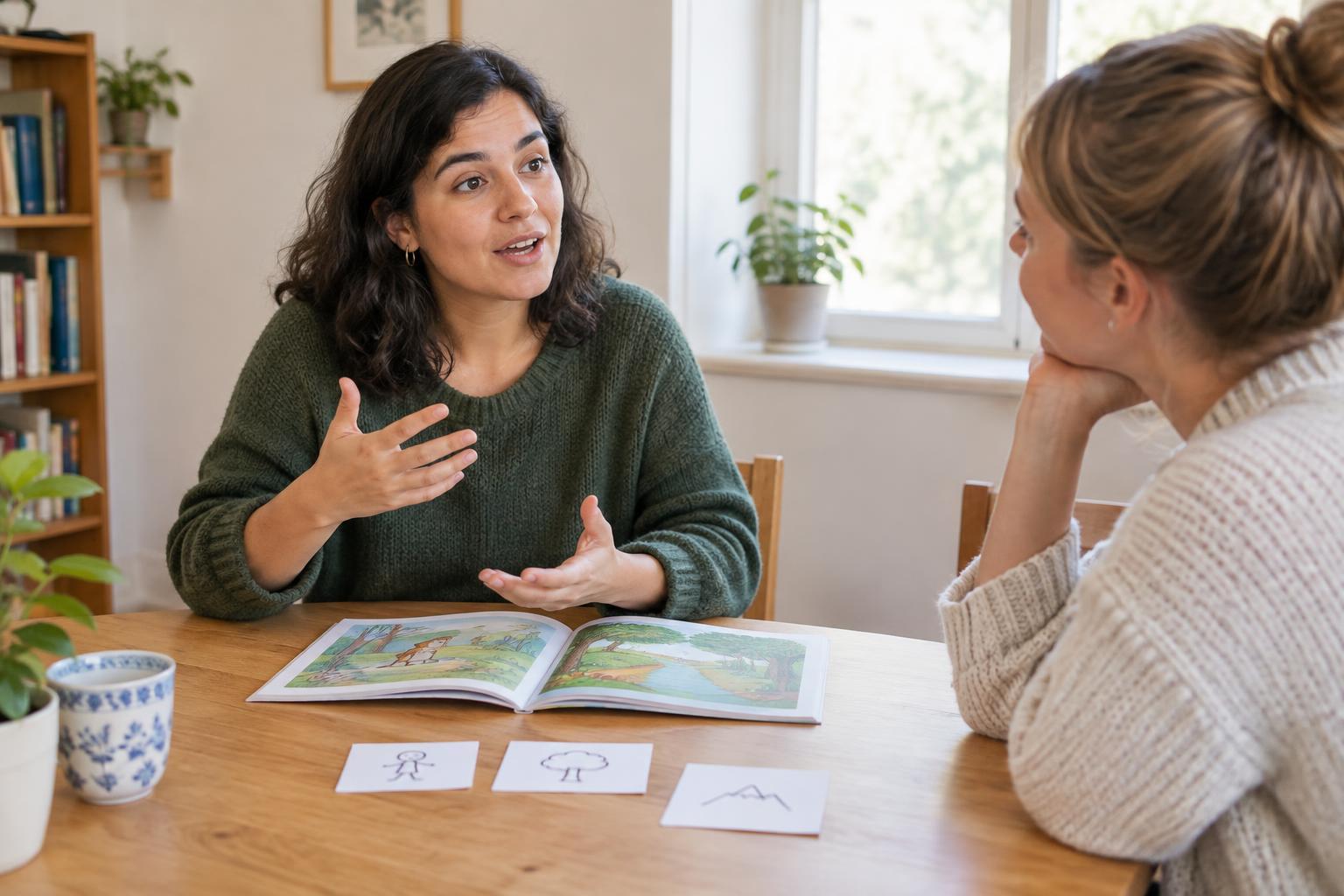
The aim is not a perfect summary. It is to communicate a sequence: who was involved, what changed and how things ended. You can retell a story aloud to yourself, record a voice note or explain it to a willing partner. Each version gives you a chance to notice what you can already say and where you need a simpler expression.
Choose a story small enough to finish
Start with a brief story, scene or anecdote whose main events you can follow. A story with a few characters and a clear beginning and ending is easier to retell than one with many side plots. If you are a beginner, an illustrated story or a short dialogue with a simple situation may be enough. More advanced learners can use a longer scene, but there is no need to make the first attempt difficult.
Read or listen once for the overall meaning. Ask yourself what happened before checking every unfamiliar word. Then go through it again and clarify only the details you need for the retelling. A name, a place or a turning point may matter; a descriptive adjective may not. This keeps preparation focused on communicating the story rather than collecting every new expression.
Make notes that support, not script, your speech
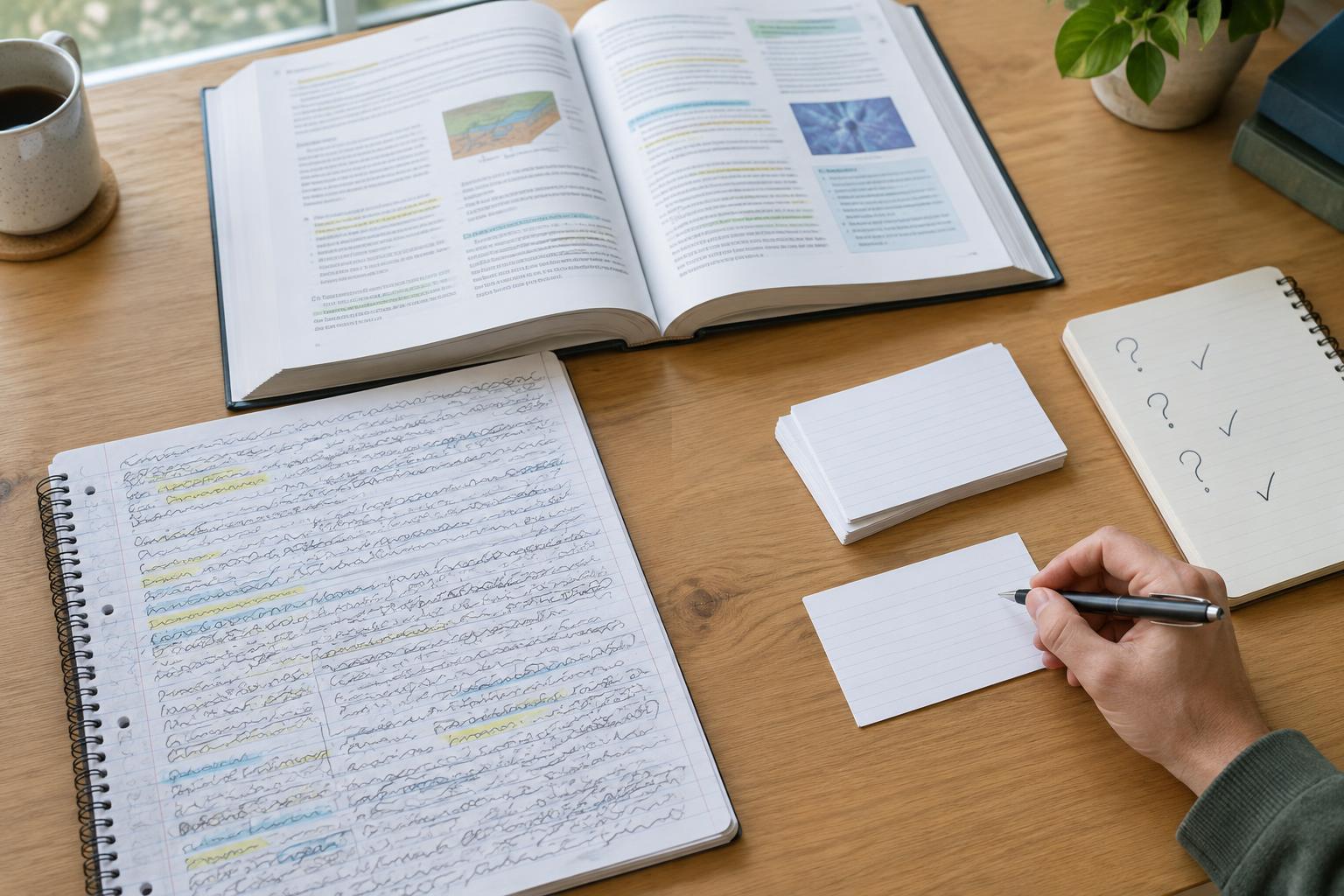
Write three to five prompts for the main events. For a story about a missed train, your prompts might be “arrives late,” “asks for help,” “finds another route” and “reaches the meeting.” Single words or short phrases are usually more useful than full sentences. If you write out the entire retelling, the exercise can become reading aloud instead of deciding what to say.
Add a few expressions you expect to need, such as words for time, cause or contrast. You might practice equivalents of “at first,” “because” and “in the end.” Do not try to include every new word from the story. Select language that helps you connect events. If you cannot recall a precise word while speaking, describe its meaning with simpler words and keep going.
Tell it once, then tell it again
For the first retelling, look at your prompts and speak without stopping to repair every sentence. Aim to get from beginning to end, even if you simplify a scene or pause to think. If you lose your place, return to the last event you remember. Finishing a rough version gives you something concrete to improve; repeatedly restarting the opening does not.
Afterward, choose one small adjustment. Perhaps the order of events was unclear, you used the same verb too often or you could not explain why a character acted. Check the original story or a reference for the expression you need, then retell it once more. The second attempt need not be longer. A clearer sequence or one useful new phrase is enough progress for a session.
Change the task when it becomes familiar
Once a straightforward retelling feels comfortable, try a variation. Tell the story from another character’s point of view, give a much shorter version or explain it to someone who has not encountered the original. You can also answer a question afterward, such as “Why did the character make that choice?” These changes encourage you to use familiar material in a new way without requiring a new story every time.
Keep the task proportionate to your current level. If speaking freely feels overwhelming, begin with two or three sentences, or record yourself in private. If the story feels too easy, reduce your notes or add an opinion about the ending. Retelling works best as a repeatable exercise: choose a manageable story, communicate its main events and make one deliberate improvement on the next attempt.