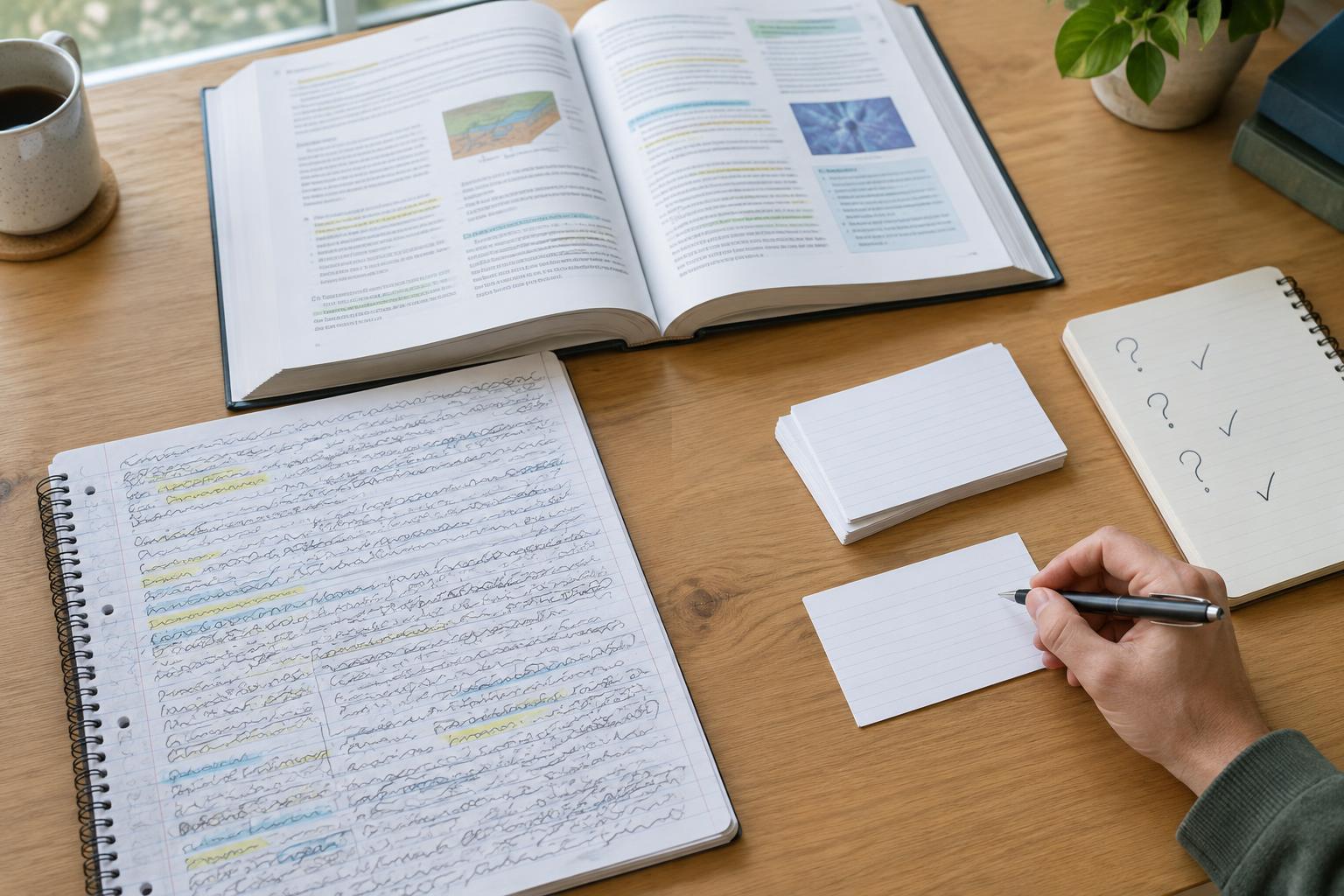
Start with what you need to remember
A review plan works best when it begins with a clear purpose. Are you trying to remember vocabulary for conversation, explain an idea in your own words, or use a procedure without looking up every step? Those goals call for different kinds of practice. Write down a few things you want to be able to do, rather than making a vague note to “review chapter three.”
Next, divide the material into manageable units. A unit might be ten unfamiliar terms, one concept and its examples, or a short sequence of steps. If a unit takes too long to check, split it. Keep a running list of these units in a notebook, document, or calendar. The list becomes a guide for deciding what to review, so you do not have to make that decision from scratch each time.
Put short sessions on the calendar
Plan the first review soon after you learn something, while the material is still familiar enough to work with. Then leave some time before you return to it. For example, you could check a topic the next day, later that week, and again the following week. Treat those intervals as a starting point, not a rule: difficult material may need another early check, while familiar material may need less attention.
A session does not have to cover everything. Give it a small, specific job, such as “recall the main argument from yesterday’s reading” or “use five new words in sentences.” Short sessions are easier to fit into ordinary days and easier to repeat. When planning your week, reserve a little room for material you unexpectedly struggle with. A calendar packed with new topics leaves no space to revisit them.
Use recall before looking at your notes
At the start of a session, put the source aside and try to bring the material to mind. Explain a concept aloud, sketch a process, answer a question you wrote earlier, or make a quick list of what you remember. You are not trying to produce a polished answer. You are checking what you can retrieve without a prompt from the page.
Then compare your attempt with the source. Mark what you missed, correct errors, and notice whether you understood the idea or merely recognized familiar wording. If you can recognize a definition but cannot give an example, make an example your next task. For reading assignments, useful prompts include “What was the central claim?” and “How does this section connect to the previous one?” For practical skills, try describing when you would use each step.
Let your results shape the next review
After each session, give every unit a simple status: comfortable, uncertain, or not yet clear. Move comfortable units farther apart on your calendar. Bring uncertain units back sooner and practice them in a different way. For material that is not yet clear, return to the original explanation or work through a fresh example before testing yourself again. Repeatedly guessing at something you do not understand is unlikely to resolve the confusion.
Keep the tracking lightweight. A date, a status, and one note about a troublesome point are often enough. For instance, “Can define the term, but mix up its two examples” tells you what to do next. Your aim is not to create a perfect record of every study minute; it is to make the next session more useful.
Make the plan resilient
Missed sessions happen. If you fall behind, avoid trying to complete every overdue review in one sitting. Choose the material you need most, do a brief recall check, and reschedule the rest. You can also set a minimum version of a session for busy days: answer two questions, explain one idea, or check one small group of terms. A modest session keeps the material in view without turning review into an all-or-nothing task.
Every so often, check whether the plan still matches your goal. If you need to use an idea in conversation or solve a problem with it, practice that use rather than reviewing only definitions. If a topic remains easy across several checks, spend less time on it and give that time to weaker areas. A good review schedule is not fixed in advance; it helps you notice what you know, identify what needs work, and choose a sensible next step.