Make a map before you need one
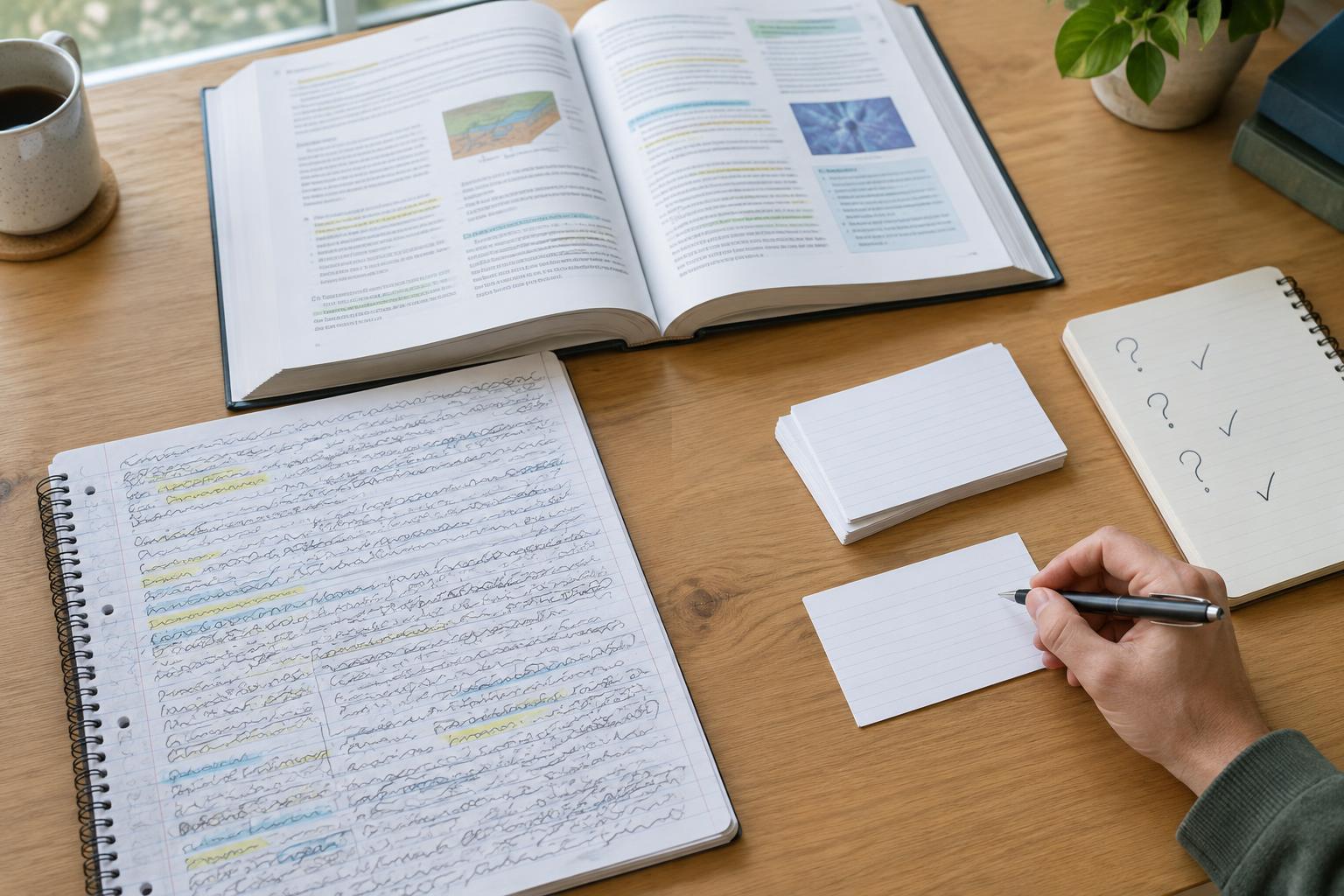
A nonfiction book may take weeks to finish, especially when you are reading around work, family, or other projects. The challenge is not always remembering individual facts. It is remembering how the part in front of you relates to what came before. Instead of relying on memory alone, keep a small continuity note: a page in a notebook or a document you can find each time you sit down to read.
Start with the book’s broad question or subject, written in your own words. Add a short line for each chapter as you finish it. A line such as “Introduces the problem and explains why the usual solution falls short” is more useful for finding your place than a list of every detail. Leave room to change these lines later. Early impressions are working notes, not verdicts on what the author means.
Record the thread, not the whole chapter
At the end of a reading session, write down three things: what the author was trying to explain, what helped explain it, and what remains unclear. You might record an example, a definition, or a question you want the next chapter to answer. Keep each entry brief enough that you will actually reread it. If the note grows into a second version of the book, it may become another task you avoid.
Include the location where you stopped and a cue about what comes next. “Stopped after the section on competing explanations; next, read the case study” gives your future self an easy starting point. If a passage seems important but you cannot yet tell why, mark its page and say so. You do not have to resolve every uncertainty before moving on; some ideas become clearer when the author returns to them.
Use a short routine when you return
Before opening the book after a gap, spend two minutes with your continuity note. Read the last entry, glance at the current chapter heading, and ask what you expect the next few pages to do. Then read a little beyond your marked stopping point if the transition feels abrupt. This is usually less work than rereading the entire previous chapter, though a longer review may help when the book is especially demanding.
Give the session a modest target, such as one section or one question to investigate. A target helps you recognize progress even if you cannot read for long. When attention slips, pause and state the point of the most recent passage in a sentence. If you cannot do that, back up to the last place you understood rather than continuing to turn pages.
Check how the parts fit together
Every few chapters, look beyond your most recent notes. What question keeps returning? Has the author added a qualification, changed scale, or addressed an objection? Draw a simple line between related chapters or add a sentence about how the book’s account has developed. This occasional review helps prevent a collection of chapter notes from feeling like unrelated fragments.
It is also reasonable to revise an earlier note. You may discover that a chapter you thought was a digression prepared you for a later argument. Mark the change instead of erasing the first impression: “I initially thought this was background; it now seems to introduce the central distinction.” Seeing your understanding change is useful. It shows which connections you made while reading, not just what you retained from the text.
Finish with a usable account
When you finish the book, try describing it without looking at your notes. What question did it address, what path did it take, and which ideas would you want to revisit? Then consult your continuity note to fill gaps and correct oversimplifications. You do not need a polished review. A few sentences about the book’s structure and one or two open questions can make it easier to return to later.
If you stopped partway through, the same notes can help you decide whether to resume. Read your latest entry and ask whether the book still serves your purpose. Sometimes the right next step is another chapter; sometimes it is setting the book aside. Either way, a clear record lets you make that choice without treating every break in reading as a failure or starting again from page one.