Start with the difference between a topic and a claim
A topic tells you what a text is about. A main claim tells you what the writer wants you to think about that topic. “Public libraries” is a topic; “Public libraries should offer more evening hours” is a claim. The second statement takes a position that a reader could question, agree with, or challenge. Finding that position is the first step toward understanding an argument.
Before searching for a single important sentence, ask: What question is this piece trying to answer? A text about evening library hours might address whether longer hours are worthwhile, who would benefit, or how a library should use a limited schedule. Writing the question in the margin can help you recognize the answer when it appears. If the piece mainly explains a process rather than arguing for a position, its central idea may be more useful to identify than a claim.
Look for the claim across the whole piece
Writers often state a main claim near the beginning, but not always. Some introduce a problem first and reveal their position later. Others return to a refined version of the claim in the conclusion. Read the opening and ending, then check whether the body develops the same point. Do not assume that the first strong opinion you notice is the central one; it may be a smaller claim serving a larger argument.
Try completing this sentence in your own words: “The writer wants readers to accept that…” Keep the answer to one sentence. If your sentence names only a broad subject, make it more specific. If it includes several unrelated points, look for the idea that connects them. Compare your wording with the text so you do not turn a cautious claim, such as “some libraries could benefit from later hours,” into an absolute one, such as “all libraries must stay open late.”
Trace the reasons, not just the examples
Supporting reasons explain why the writer thinks the claim is justified. For the library-hours claim, possible reasons might be that later opening would give working patrons more access or make a shared public space available after school and work. A quick test is to put “because” between your proposed claim and reason: “Libraries should offer more evening hours because working patrons need a time when they can visit.” If the result makes sense and reflects the text, you may have found a reason.
Evidence plays a different role. An interview, a comparison of schedules, or an account of a patron’s experience might be used to support a reason. It is helpful to mark these separately: claim, reason, evidence. You can then see the structure without mistaking a vivid example for the writer’s entire point. Ask what the example is supposed to show. If several examples serve the same purpose, the idea they share may be the underlying reason.
Make a small argument map
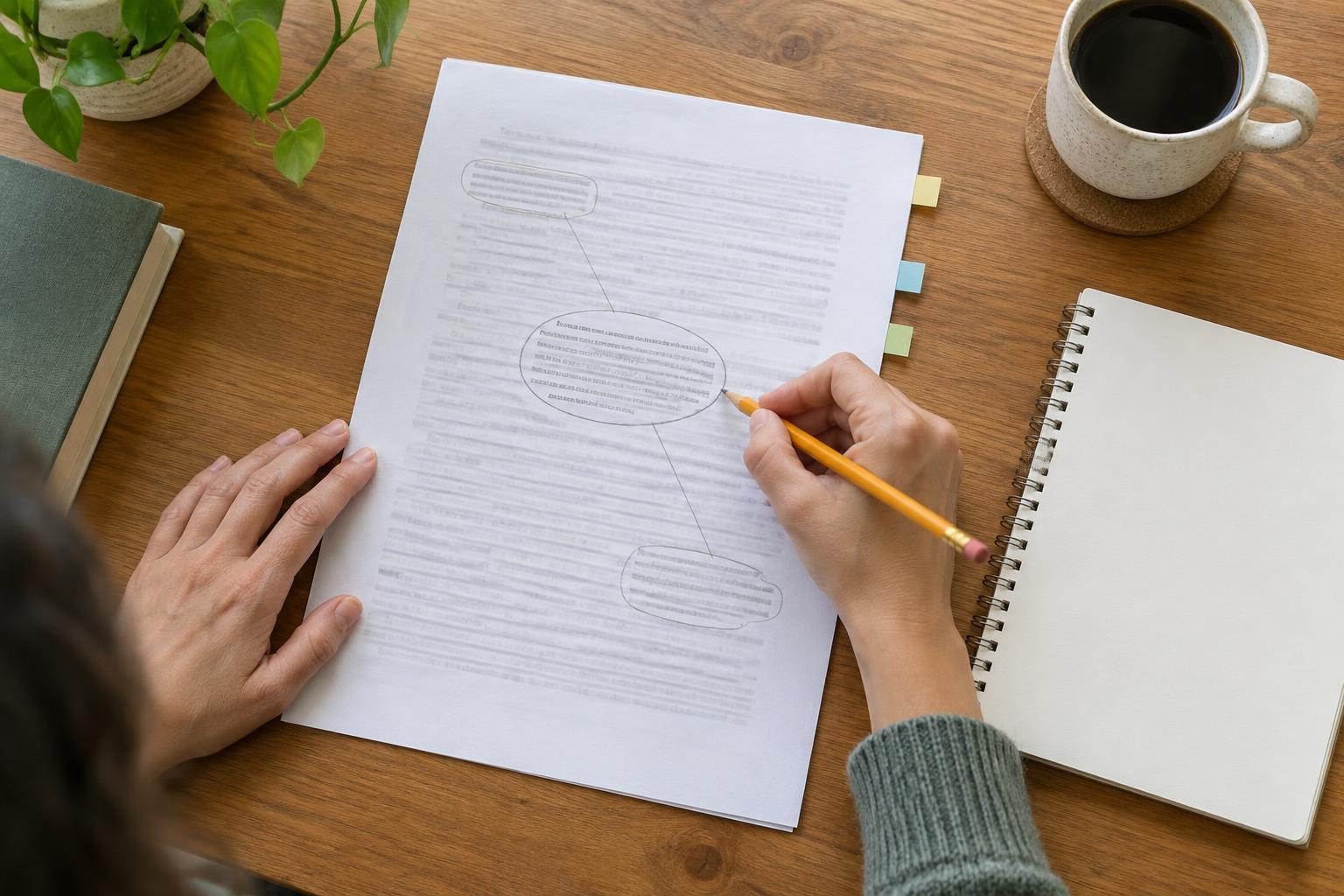
After a first read, draw or write a simple map: main claim at the top, two or three main reasons beneath it, and any evidence under the reason it supports. Use short phrases rather than copying full paragraphs. This forces you to decide how the parts connect. If a detail does not fit, it may provide background, answer an objection, or support a different reason. Not every sentence needs a place on the map.
Pay attention to words that signal a turn in the argument. “Because” and “since” can introduce reasons; “for example” may introduce evidence; “however” often marks a complication or opposing view. These words are clues, not guarantees. A writer may also acknowledge a drawback and then explain why the main claim still stands. Include that qualification in your map rather than treating it as a contradiction to ignore.
Check your reading with a two-sentence summary
Once you have mapped the piece, write two sentences without looking at your notes. In the first, state the writer’s main claim. In the second, name the most important reasons. For example: “The writer argues that the library should add evening hours. They say this would improve access for people who cannot visit during the day and make better use of the building.” Return to the text and check whether each part of your summary is actually there.
This final check also helps you separate understanding from agreement. You can accurately identify a claim and its reasons without accepting them. If you are unsure about your summary, look for a paragraph that it fails to explain. Revise until the summary accounts for the piece as a whole, including meaningful limits or exceptions. With practice, this method becomes a quick way to read arguments more carefully before forming your own response.