Start with the work you want to do
Searching is easier when you know what a resource must help you accomplish. Instead of starting with a broad topic such as photography, name a small project: take a set of clear indoor portraits using the camera you already own. Then list the tasks involved, such as understanding light, adjusting camera settings, and reviewing your results. This turns an open-ended search into a set of questions you can answer.
Write down your starting point, the time you can spend, and any constraints. A beginner may need a plain-language introduction before a detailed reference guide. Someone with limited internet access may prefer downloadable text over long videos. These details are not obstacles to finding good material; they are part of the definition of a good match.
Before searching, decide what evidence of progress you want. It might be a finished object, an explanation in your own words, or a repeatable skill. A resource that helps you produce that evidence is likely to be more useful than one that merely covers the topic broadly.
Search for answers, not an endless collection
Turn each project task into a focused search phrase. Include your level, the specific action, and any relevant tool or setting. If the first results are too general, add a narrower term. If they are too advanced, look for an introductory explanation of an unfamiliar term before returning to the original question.
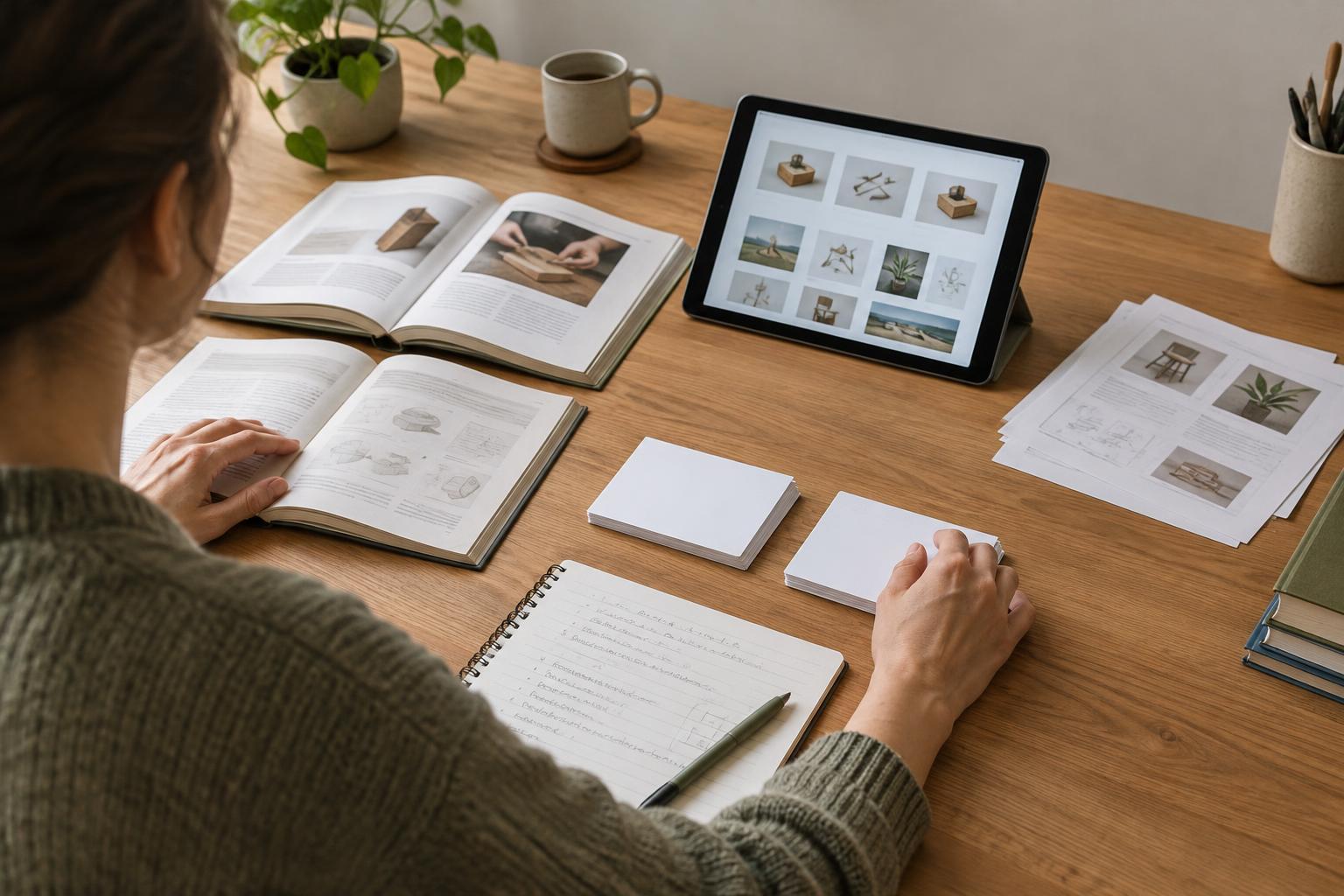
Gather a small mix of resource types. An overview can help you see how the pieces fit together; a worked example can show a process in action; an exercise can help you practise; and a reference can answer questions as they arise. You do not need one resource of every type. Choose according to what the project requires and how you learn most effectively.
Keep a short candidate list rather than saving every promising result. For each item, record its title, where to find it, the question it might answer, and why it caught your attention. This brief note prevents you from reopening the same pages later and makes comparison possible without relying on memory.
Compare fit, clarity, and trustworthiness
Test each candidate against the same questions: Does it address a task in my project? Can I follow its explanations at my current level? Does it show the steps clearly enough for me to try them? Is the format practical for the time and equipment I have? A polished presentation is pleasant, but it does not make up for missing instructions or examples that do not match your goal.
Consider how a resource supports its claims. Look for clear definitions, visible reasoning, examples you can examine, and an explanation of when an approach may not work. For topics where details change, check whether the material identifies its scope or version. Treat strong promises and unexplained shortcuts cautiously. If a point matters to your project and remains uncertain, compare it with another resource or test it on a small, low-stakes task.
A simple comparison table can help. Give each candidate a line with its main purpose, strengths, limitations, and next action: use now, keep for reference, or skip. You do not need a precise score. Written reasons are more informative than a number when two resources serve different purposes.
Choose a small working set
Select resources that have distinct jobs. You might use one guide to learn the basics, one set of exercises for practice, and one reference to consult when you get stuck. Several introductions that repeat the same material can create the feeling of studying without moving the project forward.
Try a short sample before committing to a long course, book, or tutorial series. Read one section, watch one lesson, or attempt one exercise. Then ask whether you can explain or apply something new. Notice practical friction too: unclear navigation, inaccessible formatting, unavailable tools, or exercises that require more background than expected. It is reasonable to replace a resource that looks excellent but does not work for your situation.
Put the selected materials in the order you expect to use them, alongside the project tasks they support. Keep the plan light. The aim is to know what to consult next, not to finish every page or lesson before you begin making something.
Let the project refine your choices
Begin the project early enough to discover what you actually need to learn. After a work session, note one thing you completed, one question that remains, and the resource that could help with that question. If none of your current materials addresses it, search for that specific gap rather than collecting more general advice.
Revisit your resource list as your understanding grows. An introductory guide may become unnecessary, while a detailed example becomes useful later. You can also discard a resource that no longer supports the project, even if it is well made. Finding learning resources is not a one-time hunt for the perfect list. It is a cycle of choosing, trying, checking your progress, and adjusting what you use.